
Pharmaceutical Research and Therapeutic Sciences

ABSTRACT
The quest for a non-invasive insulin delivery system remains a major challenge in pharmaceutical technology, as conventional subcutaneous injections, while effective, often compromise patient compliance due to pain, inconvenience, and safety concerns. This study explores mixed dry reverse micelles (dRMs) incorporated into a self-nanoemulsifying drug delivery system (SNEDDS) as a potential oral insulin platform capable of overcoming enzymatic degradation, poor permeability, and first-pass metabolism. Human recombinant insulin was successfully encapsulated within reverse micelles using Miglyol, Brij, and Span 80 as the lipid–surfactant system, followed by lyophilization to obtain dry micelles, which were re-dispersed into SNEDDS. The optimized formulation displayed a nanoscale particle size of 172 ± 18 nm with a narrow polydispersity index (0.301 ± 0.02) and near-neutral zeta potential (+1.38 mV), indicating good colloidal stability and suitability for intestinal absorption. Characterization studies including FTIR and morphological analysis confirmed successful encapsulation without structural degradation of insulin, while cytotoxicity assays demonstrated high cell viability (>85%), establishing the formulation’s biocompatibility. Functional evaluation revealed significantly enhanced performance, with in vitro diffusion showing a 3.7-fold increase in insulin permeation compared to free insulin and ex vivo goat intestine studies confirming improved mucosal transport. These improvements can be attributed to the nanoscale size enhancing surface area and absorption, protection of insulin from enzymatic degradation, and surfactant-mediated transient permeability enhancement. Collectively, the findings demonstrate that dRMs embedded in SNEDDS provide a stable, safe, and effective carrier system that can address the key challenges of oral insulin delivery. While further in vivo pharmacokinetic and pharmacodynamic studies are required to validate systemic absorption and glycemic control, the present results provide strong preclinical evidence that mixed dry reverse micelles within SNEDDS represent a promising and scalable strategy for developing oral insulin therapies, potentially reducing reliance on injections and significantly improving patient adherence in diabetes management.
Keywords: Oral Insulin Delivery; Mixed Dry Reverse Micelles; Snedds; Nanocarriers; Bioavailability Enhancement; Peptide Drug Delivery; Intestinal Permeability; Diabetes Management
INTRODUCTION
Insulin
For a century, insulin has been life-saving and needle-dependent. While subcutaneous injections achieve reliable glycemic control, they introduce daily pain, sharps disposal, dose-timing burden, and anxiety that can erode long-term adherence. These practical realities have driven a sustained search for non-invasive insulin delivery that is safe, convenient, and cost-effective, yet still offers good bioavailability and dosing predictability. Among the most promising formulation concepts is insulin preparation via the dry reverse micelles (dRM) method, an approach that packages hydrophilic insulin inside nanoscopic, water-in-oil assemblies (reverse micelles) and then converts them into a dry, storage-stable intermediate that can be re-dispersed into lipid systems for oral, nasal, or pulmonary delivery.
Why reverse micelles—and why “dry”?
Reverse micelles (RMs) are nanoscale droplets formed when surfactants organize in nonpolar media, creating inward-facing polar cores that can host fragile biomacromolecules like insulin. This microenvironment shields insulin from interfacial denaturation and enzymatic degradation, can modulate local pH/ionic strength, and, critically, improves apparent solubility and membrane interaction once the system contacts biological barriers. Early proof-of-concept work showed insulin could be solubilized in anhydrous reverse micelles, preserved by lyophilization, and reconstituted into oil phases without loss of activity—achieving room-temperature stability up to 12 months in some formulations [1]. Subsequent microemulsion-based designs, often created by a reverse-micellar route, demonstrated meaningful oral bioavailability and glucose lowering in animal models (e.g., ~10-fold higher bioavailability vs. aqueous insulin solution in rats.
The “dry” step (spray-drying or lyophilization of the RM dispersion) offers practical advantages:
- handlingandscale-uparesimplerforpowdersthanfordelicatenano emulsions;
- shelf-life typically improves because hydrolytic and proteolytic pathways slow in the absence of bulk water; and
- dry intermediates can be plug-and-play excipients later re-dispersed into self-emulsifying drug delivery systems (SEDDS) or other lipid carriers at the point of fill, allowing consistent droplet formation during digestion and absorption. Recent studies with peptides such as semaglutide, exenatide, and model proteins have compared reverse micelles vs. hydrophobic ion-pairing as routes to load peptides into SEDDS, with dRMs frequently enabling higher loading and more robust re-dispersion (albeit with long equilibration times during dry loading.
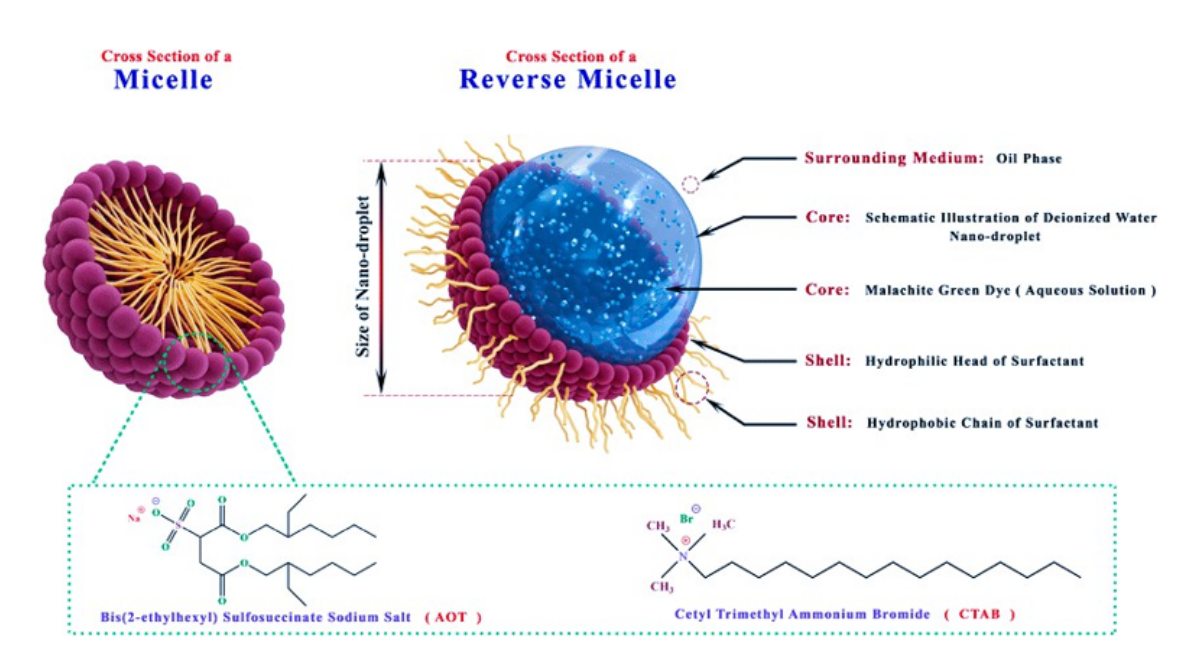
Figure 1.1: Cross-Sectional View of Micelle and Reverse Micelle
Safety, convenience, and Patient Compliance
A non-invasive insulin built on dRMs could eliminate injections for many doses, improving patient comfort and compliance. Formulations amenable to oral capsules or nasal sprays simplify self-administration and reduce the stigma and logistics associated with needles. From a systems perspective, dRM-enabled oral insulin could be cost-effective by reducing nursing time for injections, cutting sharps waste, and potentially stabilizing cold-chain requirements if the dry intermediate is room-temperature stable. Safety considerations include the biocompatibility of surfactants and oils, the avoidance of mucosal irritation, and dose-dumping risks if emulsification is perturbed; these have been manageable in lipid-based peptide systems when pharmaceutically acceptable excipients and conservative surfactant levels are used.
Bioavailability Gains Without Injections
The central pharmacokinetic promise is better bioavailability for a peptide that is notoriously degraded and poorly permeable by mouth. dRM-loaded insulin in microemulsions/SEDDS can:
- Protect against enzymatic degradation in the lumen and at the unstirred water layer;
- Enhance trans-epithelial transport via surfactant-mediated permeability increases, chylomicron uptake, or lymphatic transport, thereby mitigating first-pass hepatic metabolism; and
- Localize insulin near absorptive surfaces in a solubilized, diffusible state, increasing the effective concentration gradient.
Collectively, these mechanisms have yielded glucose-lowering in animals with quantifiable oral bioavailability improvements compared with aqueous insulin, and growing evidence in related peptides (e.g., semaglutide) that reverse-micellar and dry-loading approaches can be engineered into clinically realistic oral platforms.
Targeted Therapy and Advanced Carriers
Beyond simple solubilization, dRMs integrate readily with advanced drug delivery systems to enable targeting and controlled release. For instance, hyaluronic-acid coatings and other ligand shells on SEDDS/nanoparticles can direct uptake toward receptors on intestinal epithelia or M-cells, potentially improving transport while limiting systemic exposure elsewhere. Biological carriers (e.g., mucoadhesive polysaccharides, exosomes, or bile-salt-mimicking lipids) and triggerable designs (pH-sensitive coatings that dissolve in the intestine) can be layered around dRM-loaded cores to further stabilize insulin and steer absorption.
Navigating real-world barriers: solubility, permeability, first pass, and efflux
Even with dRMs, multiple oral barriers remain. Insulin faces low intrinsic permeability and harsh luminal proteases; dRMs mainly address solubility and microenvironmental protection while carriers like SEDDS improve membrane interaction. Importantly, efflux transporters (e.g., P-glycoprotein, MRPs, BCRP) can lower net absorption of co-formulated permeation enhancers or transporter-substrates; strategies like transient efflux inhibition, surfactant selection, or receptor-mediated transcytosis are being investigated to blunt this effect without compromising safety. Because one objective of lipid-based oral delivery is to bias uptake toward lymphatics, well-designed SEDDS around a dRM core can also reduce first-pass hepatic extraction and flatten variability hat arises from portal circulation.
Stability changes and manufacturability
Peptide stability both physical (aggregation/adsorption) and chemical (deamidation/oxidation)—is a critical limitation. The dRM microenvironment can preserve secondary structure (e.g., circular dichroism/fluorescence data for insulin in RM systems), while drying arrests many degradative pathways. That said, process stresses (shear, interfacial exposure during atomization, residual moisture) must be controlled; modern spray-drying protocols using disaccharide matrices (trehalose) and amino acids (leucine) have shown excellent dispersibility and long-term storage stability for micelles, liposomes, and solid lipid nanoparticles—principles transferrable to dRM intermediates. A practical trade-off is equilibration time: dry-loading peptides into reverse micelles may require extended mixing (e.g.,~24 hours reported for semaglutide) to achieve complete incorporation, which affects.
Limitations and Risk–Benefit Balance
Despite compelling advances, several limitations merit emphasis
- Variable bioavailability across subjects due to differences in gastric emptying, bile secretion, and diet—common to all lipid-based oral systems [1,2].
- Excipient safety windows: surfactant levels must balance permeability enhancement with mucosal tolerability [1,3].
- Scale-up complexity: achieving narrow, reproducible dRM size distributions and consistent dry-powder properties requires tight process control and analytics [4,5].
- Regulatory path: non-traditional excipient combinations and transporter-modulating strategies demand rigorous clinical safety packages and food-effect evaluations [6,7].
Even so, the benefit profile—non-invasive delivery, patient convenience, potential cost savings, improved compliance, targeted therapy options, and reduced first-pass loss—makes dry reverse micelles a credible platform in the broader move toward practical oral (or other non-injectable) insulin.
OBJECTIVES OF STUDY
- To develop and optimize insulin-loaded mixed dry reverse micelles (dRMs) incorporated into a self-nanoemulsifying drug delivery system (SNEDDS) for oral administration.
- To characterize the physicochemical properties of the formulation, including particle size, polydispersity index (PDI), zeta potential, morphology, and encapsulation efficiency.
- To evaluate the biocompatibility and cytotoxicity of the prepared formulation using in vitro cell-based assays.
- To investigate the in vitro drug release profile and compare the diffusion of insulin from dRMs with free insulin solution.
- To perform ex vivo intestinal permeability studies using isolated goat intestine to assess the absorption potential of the formulation.
- To analyze the ability of dRMs within SNEDDS to protect insulin from enzymatic degradation and enhance its intestinal transport.
To assess the overall potential of the developed system as a safe, stable, and effective oral insulin delivery platform that could improve patient compliance and therapeutic outcomes.
LITERATURE REVIEW
Getaway provided a thorough examination of the primary challenges faced in developing effective oral insulin formulations. These challenges include the enzyme-rich environment of the gastrointestinal tract (GIT), which rapidly degrades insulin, its poor permeability across the intestinal mucosa, and the physical and chemical barriers that collectively result in insufficient bioavailability. They discussed how various innovative approaches—such as enzyme inhibitors to slow breakdown, enteric coatings to protect insulin from stomach acid, and absorption enhancers to increase uptake—are being combined with novel carrier systems to tackle these obstacles. Their review strongly suggested that a successful oral insulin formulation must employ a holistic approach incorporating lipid-based carriers endowed with stabilizing agents to simultaneously protect insulin from degradation and facilitate its absorption.
Expanding on these strategies, Cui studied insulin–phospholipid complexes encapsulated into polymeric nanoparticles via a reverse micelle-solvent evaporation technique [8]. These nanoparticles, averaging about 200 nanometers in size with approximately 90% insulin entrapment efficiency, demonstrated controlled insulin release behavior across a wide pH range, simulating different GIT environments. When administered orally in laboratory animals, these nanoparticles markedly improved insulin's bioavailability to 7.7%, nearly a fivefold increase compared to free insulin. This study highlights the potential of reverse micelle encapsulation to not only shield insulin from enzymatic degradation but also to enhance its traversal through the intestinal barrier, emphasizing reverse micelle technology as a promising method for oral insulin delivery.
More recently, Ricci introduced the innovative concept of mixed dry reverse micelles (dRMs) as carriers tailored for protein delivery applications [9]. They used horseradish peroxidase, an enzyme model, to demonstrate this system's feasibility. By combining soybean phosphatidylcholine with sodium docusate, they engineered dRMs that significantly increased the protein's lipophilicity while enabling direct incorporation into self-emulsifying drug delivery systems (SEDDS) without the need for organic solvents
thereby simplifying preparation and improving safety. Their dRMs remarkably maintained over 95% enzymatic activity after exposure to intestinal conditions, proving the protective nature of dry reverse micelles. This offers compelling evidence for adapting this versatile method to tackle oral insulin delivery challenges, where enzyme preservation and efficient transport are critical orifice area, mean transvalvular pressure gradient, and left ventricular mass or left ventricular mass index regression.
In a comparative investigation, Schmidt evaluated two techniques to improve oral peptide delivery: hydrophobic ion pairing (HIP) and dry reverse micelles (dRMs) [10]. Their findings revealed that while HIP moderately enhanced peptide lipophilicity, the loading capacity was limited and protection from proteolytic enzymes was lower. Conversely, dry reverse micelles displayed notably higher drug loading capabilities and superior enzymatic protection. This comparative analysis concluded that dRMs represent a more effective strategy for insulin encapsulation within lipid-based carriers, lending strong support to employing dry reverse micelle technology in advanced oral peptide delivery systems.
Al-Tahan also contributed by analyzing reverse micelles with phosphatidylcholine formed in aqueous compartments, focusing on their peptide stabilization capabilities. Their study underscored the importance of employing gentle manufacturing techniques that preserve peptide bioactivity, an essential factor for oral formulations. It was confirmed that phosphatidylcholine-based reverse micelles could be successfully integrated into SNEDDS, establishing their compatibility and efficiency for oral insulin delivery within lipid carrier systems. This highlights the critical balance between maintaining biologic activity and achieving practical formulation feasibility [11].
The advantages of SNEDDS as delivery platforms were comprehensively reviewed by Buya [12]. They emphasized the pronounced thermodynamic stability of SNEDDS, their straightforward manufacturing processes, and their ability to enhance drug absorption, partly via lymphatic transport. They pointed out that although their work covered various bioactive molecules, SNEDDS are especially advantageous for peptides when combined with protective encapsulation strategies like reverse micelles. Such combinations allow SNEDDS to function as the external carrier system that enhances absorption. Sensitivity and Subgroup Analyses. The advantages of SNEDDS as delivery platforms were comprehensively reviewed by Buya [12]. They emphasized the pronounced thermodynamic stability of SNEDDS, their straightforward manufacturing processes, and their ability to enhance drug absorption, partly via lymphatic transport. They pointed out that although their work covered various bioactive molecules, SNEDDS are especially advantageous for peptides when combined with protective encapsulation strategies like reverse micelles. Such combinations allow SNEDDS to function as the external carrier system that enhances absorption while reverse micelles hold the labile peptide drug securely, offering a synergistic effect in boosting oral bioavailability.
Lin advanced this concept by pioneering a reverse micelle/SNEDDS (RM/SEDDS) hybrid nanoplatform designed to overcome multiple biological barriers involved in oral delivery, including both the mucus layer and epithelial cellular barriers [13]. Their innovative formulation dispersed as SNEDDS droplets to efficiently traverse the mucus, followed by the release of reverse micelles inside cells that facilitated insulin internalization by membrane fusion. This dual-stage delivery mechanism cleverly exploits the unique properties of both lipid nanosystems, strongly justifying combination of dry reverse micelles with SNEDDS in effective oral insulin delivery systems.
Supporting this paradigm, Dong developed solid precursor pellets that upon hydration transformed into bile salt/phospholipid mixed micelles compatible with oral peptide delivery [14]. Their PreMM pellets exhibited consistent, reproducible dosing and formed functional micelles in the intestinal environment, showcasing the viability of solid-state micellar systems that convert in situ. This aligns closely with the concept of dry reverse micelles in SNEDDS, where solid formulations transform into active delivery systems upon administration.
Further revitalizing lyophilized oral peptide formulation research, Wang formulated water-in-oil emulsions containing phospholipid-based reverse micelles [13]. Their freeze-dried products maintained structural stability and peptide protection even under simulated gastric acid conditions, demonstrating the feasibility of dry phospholipid micelles in preserving peptide integrity for oral administration.
Zhou investigated insulin phospholipid complexes, showing that these complexes have high complexation efficiency and improved stability, verified through techniques like FTIR and Raman spectroscopy [15]. These interactions not only enhance insulin's lipophilicity but also improve its compatibility with lipid carriers, which ultimately facilitates integration into reverse micelle systems.
Qiu extended this lipid complexation strategy to heparin by preparing heparin–phospholipid complexes incorporated into SNEDDS, significantly improving heparin's solubility and intestinal absorption [9]. This study provides indirect but persuasive evidence that such lipid complexation methods can be effectively translated to improve oral insulin delivery via lipid carriers.
Wang introduced oil-soluble reverse lipid nanoparticles (ORLN) where insulin was encapsulated within phospholipid shells suspended in an oil phase [14]. This hybrid system provided prolonged pharmacodynamic effects post-oral dosing and enhanced absorption by protecting insulin from enzymatic degradation and facilitating transcellular transport. The similarity of this approach to mixed dry reverse micelles combined with SNEDDS lies in their shared mechanistic focus on encapsulation-mediated protection and uptake enhancement.
He presented mucoadhesive reverse micelle-lipid nanocapsules that improved peptide delivery by conjugating insulin with bioadhesive peptides [7]. This conjugation increased mucoadhesion and intestinal retention time, leading to improved oral absorption and bioavailability. This innovative strategy highlights how combining mucoadhesive properties with reverse micelle technology can further enhance oral insulin delivery challenges.
Rachmawati constructed insulin–phospholipid microemulsion films for intraoral delivery and achieved droplets approximately 100 nanometers in size, entrapping nearly 90% of insulin [10]. Their formulation significantly improved glycemic control in mouse models compared to free insulin. Stability analyses confirmed the complex’s structural integrity, emphasizing the translational potential of micellar-lipid systems for oral peptide therapies.
Lastly, Buickbedadan reviewed polymeric micelles and SNEDDS as insulin carriers, noting their combined benefits including improved stability, controllable release profiles, and enhanced bioavailability [16]. They proposed that hybrid systems such as reverse micelles embedded within SNEDDS optimally blend physicochemical stability and biological absorption enhancement, thereby holding promise for clinical insulin delivery advancement.
Additional recent studies have highlighted the role of mucoadhesive SNEDDS formulations incorporating polysaccharides like sodium alginate and guar gum to promote mucosal residence time, further improving insulin absorption. Furthermore, research on the physicochemical relationships between peptide size and encapsulation efficiency suggests that optimizing reverse micelle formulation parameters for insulin, a medium-size peptide, could enhance loading and release characteristics more effectively [17].
These collective insights strongly support the potential of mixed dry reverse micelles integrated into SNEDDS as a cutting-edge, multifunctional oral insulin delivery platform that addresses key challenges such as enzymatic degradation, membrane permeability, stability, and biocompatibility to ultimately improve patient outcomes.
METHODOLOGY
The methodology of this study was designed to systematically develop, optimize, and evaluate insulin-loaded mixed dry reverse micelles (dRMs) incorporated into a self-nanoemulsifying drug delivery system (SNEDDS) for oral administration. A stepwise approach was employed, beginning with the selection of pharmaceutically acceptable excipients (Miglyol, Brij, and Span 80) to prepare reverse micelles capable of encapsulating human recombinant insulin. The prepared formulations were subsequently lyophilized to obtain stable dry micelles and reconstituted into SNEDDS [18-20]. Comprehensive characterization techniques, including particle size analysis, polydispersity index (PDI), zeta potential, FTIR spectroscopy, and morphological studies, were conducted to confirm physicochemical stability and successful encapsulation. Functional performance was assessed through in vitro diffusion studies, ex vivo intestinal permeability assays using goat intestine, and in vitro cytotoxicity testing to ensure safety and biocompatibility. This integrated methodological framework allowed both the technological feasibility and biological relevance of the proposed oral insulin carrier system to be evaluated.
Materials of solution A
The materials used in this study included human recombinant insulin (5 mg per formulation) as the model peptide drug, Miglyol (medium chain triglyceride oil) as the oil phase, Brij (polyoxyethylene alkyl ether surfactant) and Span (sorbitan ester surfactant) as the surfactant–co-surfactant system, and absolute ethanol as the solvent. All chemicals were of analytical grade and used as received without further purification [21]. Distilled water was used wherever necessary, and all glassware was sterilized prior to use to avoid contamination of the formulations.
Span80
Span 80 (Sorbitan Monooleate) is a non-ionic surfactant widely used in pharmaceutical formulations, cosmetics, and food industries. Chemically, it is a sorbitan ester of oleic acid, with the molecular formula C₂₄H₄₄O₆ and a molecular weight of 428.6 g/mol. Span 80 is lipophilic in nature with a low Hydrophilic–Lipophilic Balance (HLB) value of around 4.3, making it suitable for stabilizing water-in-oil (W/O) emulsions. In drug delivery systems, it functions as a co-surfactant that reduces interfacial tension, enhances solubilization of lipophilic components, and helps in stabilizing emulsions and micelles. Its non-ionic character provides good biocompatibility and low toxicity, making it favorable for oral, topical, and parenteral formulations. In the present formulation, Span 80 is used in combination with Brij to maintain the stability of the mixed reverse micelles within the self-nanoemulsifying drug delivery system (SNEDS) for oral insulin delivery [22].
Brij
Brij (Polyoxyethylene Alkyl Ethers) is a class of non-ionic surfactants derived from fatty alcohols with polyoxyethylene (PEG) chains. The general formula is CnH2n+1–(OCH2CH2)m–OH, where n represents the alkyl chain length and m represents the number of ethylene oxide units. Brij surfactants are amphiphilic in nature, containing both hydrophilic polyoxyethylene chains and a lipophilic hydrocarbon chain. Their Hydrophilic–Lipophilic Balance (HLB) values vary depending on the degree of ethoxylation, making different Brij grades suitable for either oil-in-water (O/W) or water-in-oil (W/O) emulsions [23].
Miglyol
Miglyol is a trade name for a group of medium-chain triglycerides (MCTs) derived from natural vegetable oils such as coconut oil or palm kernel oil. Chemically, Miglyol consists mainly of esters of glycerol with caprylic acid (C8) and capric acid (C10). It is a clear, colorless, and virtually odorless oily liquid with excellent oxidative stability. Due to its low viscosity, high spreading capacity, and good solubilizing properties, it is widely used in pharmaceuticals, nutraceuticals, and cosmetics. Miglyol is used as the oil phase to dissolve the hydrophobic components and facilitate the formation of mixed reverse micelles with surfactants (Brij and Span 80). This allows insulin to be encapsulated in a stable nano emulsion, enhancing its protection against enzymatic degradation in the gastrointestinal tract and improving intestinal absorption [24-25].
Insulin
The therapeutic protein encapsulated within the aqueous core of the reverse micelles for protection, stabilization, and potential controlled release. From a pharmaceutical perspective, insulin is a hydrophilic, macromolecular, and enzymatically labile protein, which makes oral delivery extremely challenging. In the gastrointestinal tract, it undergoes rapid enzymatic degradation by proteases and shows poor permeability across the intestinal epithelium due to its large molecular size and hydrophilicity. For this reason, insulin is traditionally administered via subcutaneous injections [26].
Preparation
The insulin-loaded self-nanoemulsifying formulation was prepared using Brij, Span, and Miglyol as the surfactant system with ethanol as solvent. Initially, 5 mg of insulin was dissolved in 5 mL of absolute ethanol under magnetic stirring for 30 minutes to ensure complete solubilization. To this solution, 5 mg of Miglyol (medium chain triglyceride oil) was added dropwise with continuous stirring to allow uniform dispersion of the oil phase. Separately, a surfactant–co-surfactant mixture was prepared by dissolving 5 mg of Brij and 7.5 mg of Span in 5 mL ethanol and stirring for 10–15 minutes until a clear homogeneous solution was obtained. This surfactant mixture was then added dropwise into the insulin–Miglyol solution under constant stirring, maintaining slow addition to avoid phase separation. The final mixture was stirred continuously at room temperature for 24 hours to allow the self-assembly of reverse micelles and formation of a stable self-nanoemulsifying drug delivery system (SNEDDS).
|
Material |
Function |
Concentration / Quantity |
|
Insulin |
Active drug |
5 mg (dissolved in 5 mL ethanol) |
|
Ethanol (absolute) |
Solvent |
5 mL (for insulin) + 5 mL (for surfactants) |
|
Miglyol (MCT oil) |
Oil phase (lipid carrier) |
5 mg (dropwise addition) |
|
Brij (surfactant) |
Primary surfactant |
5 mg (Procedure A) / 10 mg (Procedure B variation) |
|
Span (co- surfactant) |
Stabilizer (W/O or O/W modifier) |
7.5 mg |
|
Distilled Water |
Dilution (if needed) |
As required |
Table 3.1: Composition of Solution A
Materials of solution B
The formulation of Solution B was composed of insulin as the active pharmaceutical ingredient, ethanol as the solvent medium, Miglyol (medium-chain triglyceride) serving as the lipid carrier, Brij acting as the primary non-ionic surfactant, and Span as the co-surfactant to stabilize the Nano emulsion system. Insulin (5 mg) was dissolved in 5 mL ethanol to form the drug phase, while Miglyol (5 mg) provided the oil phase for micelle formation. Brij (10 mg) and Span (7.5 mg), dissolved in 5 mL ethanol, constituted the surfactant–co-surfactant mixture required for the stabilization of mixed reverse micelles. Distilled water was employed where necessary to adjust or dilute the system during the preparation and evaluation of the self-nanoemulsifying drug delivery system (SNEDS) [27].
Preparation
For the preparation of Solution B, human recombinant insulin (5 mg) was first dissolved in 5 mL of absolute ethanol and stirred for 30 minutes. Miglyol (5 mg) was then added dropwise as the oil phase. A surfactant–co-surfactant mixture was prepared separately, consisting of Brij (10 mg) and Span (7.5 mg) dissolved in 5 mL of ethanol, and this mixture was added dropwise into the insulin solution under continuous stirring. The final formulation was stirred for 24 hours to allow complete homogenization and stabilization of the self-nanoemulsifying drug delivery system (SNEDS). Distilled water was used wherever necessary for dilution during characterization.
|
Material |
Function |
Concentration/Quantity |
|
Insuline |
Active drug |
5 mg (dissolved in 5 mL ethanol) |
|
Ethanol(absolute) |
Solvent |
5 mL (for insulin) + 5 mL (for surfactants) |
|
Miglyol (MCT oil) |
Oil phase (lipid carrier) |
5 mg (dropwise addition) |
|
Brij(surfactant) |
Primary surfactant |
10 mg (increased amount for B) |
|
Span(co-surfactant) |
Stabilizer |
7.5 mg |
|
Distilled water |
Dilution (if needed) |
As required |
Table 3.2: Composition of Solution B
Characterization of the Formulation
The prepared insulin loaded SNEDDS system was characterized to evaluate its physicochemical properties, stability, and suitability for oral delivery. Various analytical techniques were employed:
Particle Size and Polydispersity Index (PDI)
The mean particle size and distribution of the nanoemulsion droplets were determined using Dynamic Light Scattering (DLS). A small particle size (usually < 200 nm) with a narrow PDI (< 0.3) indicates uniformity and stability of the nanoemulsion, which is essential for intestinal absorption.
Zeta Potential Measurement
The surface charge of the droplets was measured to assess colloidal stability. A sufficiently high zeta potential (positive or negative) prevents aggregation of particles due to electrostatic repulsion, ensuring stability during storage and in the gastrointestinal environment [28].
Encapsulation Efficiency (EE%)
The percentage of insulin successfully encapsulated within the reverse micelles was determined by separating the free insulin from the formulation (via ultracentrifugation or dialysis) and analyzing insulin content using UV spectrophotometry, HPLC, or ELISA. High encapsulation efficiency ensures maximum protection of insulin against enzymatic degradation analyzing insulin content using UV spectrophotometry, HPLC, or ELISA. High encapsulation efficiency ensures maximum protection of insulin against enzymatic degradation.
Drug Loading Capacity
The amount of insulin incorporated per unit weight of the formulation was quantified to confirm dosage adequacy.
In-vitro Drug Release Studies:
The release profile of insulin from the SNEDS formulation was studied using simulated gastric fluid (SGF) and simulated intestinal fluid (SIF). A sustained release pattern with protection in acidic pH (stomach) and release in intestinal pH indicates effectiveness for oral delivery [29].
Preparation of tissue
A freshly isolated segment of goat small intestine was obtained, cleaned of mesenteric tissue, and gently rinsed with cold phosphate-buffered saline (PBS, pH 7.4) to remove luminal contents. The segment was mounted on a clean glass board in a slightly inclined position (≈15°), with the proximal end elevated to allow gravity-assisted flow toward the distal end. A micro centrifuge tube was positioned at the outlet to collect effluent.
Application of formulations
Four formulations of mixed dry reverse micelles containing insulin (labeled A–D) were prepared. Each formulation was transferred into separate Eppendorf tubes. Using a dropper, one drop was applied to the proximal opening every 10 seconds. Application continued for 30 minutes, ensuring
that each formulation was completely dispensed within the given time frame. Effluent samples that flowed out of the distal end were collected in their corresponding labeled Eppendorf tubes (A–D).
Sample Handling
Collected samples were stored on ice immediately after collection to prevent degradation of insulin. The samples were later centrifuged at 10,000 rpm for 5 minutes to remove tissue debris. Supernatants were analyzed for insulin content using [specify assay method, e.g., HPLC/ELISA/UV spectrophotometry] against a calibration curve of standard insulin solution [30].
Data Analysis
The cumulative permeated amount of insulin was calculated for each formulation. Apparent permeability coefficient (Papp) was estimated using the equation:
Papp= dQ/dt/A – C0
where is the steady-state flux is the effective surface area of intestinal tissue exposed and is the initial concentration of insulin applied. A blank (PBS only) and a control group (free insulin solution without micelles) were also tested under identical conditions for comparison.
In-vitro Diffusion Study
The diffusion profile of insulin from mixed dry reverse micelles was evaluated using a dialysis membrane method. Samples (insulin-loaded micelles and free insulin) were placed in the donor compartment, with phosphate buffer (pH 7.4) as receptor medium, maintained at 37 ± 0.5 °C under constant stirring. At predetermined intervals, aliquots were withdrawn and analyzed spectrophotometrically for insulin content. Results showed a significantly higher cumulative diffusion of insulin from reverse micelles compared to free insulin, confirming improved permeability potential. [31].
Cell viability/ Cytotoxic study
The cytotoxicity of Insulin-loaded reverse micelles was assessed by the MTT assay. Cells were seeded in 96-well plates and incubated with test formulations (insulin suspension, insulin-loaded reverse micelles, Triton X-100 as positive control, and untreated control) for 3 h and 24 h. After incubation, MTT reagent was added and incubated for 4 h to allow viable cells to reduce MTT into purple formazan crystals. The crystals were solubilized with DMSO, and absorbance was measured at 570 nm using a microplate reader. Cell viability (%) was calculated relative to untreated control. Results confirmed >85% viability for both insulin suspension and insulin-loaded reverse micelles, indicating good biocompatibility. The method was adapted from Mosmann [32].
Cell permeability study
Fresh goat intestine was procured and immediately rinsed with PBS to eliminate residual luminal matter. A segment was mounted on a glass surface inclined at approximately 15°, with a collection tube placed at the lower end. Four formulations of insulin-loaded mixed dry reverse micelles were transferred into separate Eppendorf tubes (labeled A–D). Using a dropper, one drop was added every 10 seconds to the proximal end, with the entire content dispensed over a 30-minute period. The outflowing solution was collected in tubes marked according to the applied formulation. All collected samples were stored on ice, centrifuged, and analyzed for insulin concentration by [specify method]. Data were expressed as cumulative permeation, and permeability coefficients were estimated using the relation. Control experiments with PBS and free insulin were also conducted. (Gastrointestinal absorption of drugs: methods and studies, 26 August 2009.
Particle Size, Zeta Potential, and PDI Analysis
The prepared formulation (F1) was evaluated for its average particle size, surface charge, and polydispersity index (PDI) using a particle size analyzer. The mean particle size of F1 was found to be 172 ± 18 nm, indicating that the vesicles were in the nanometer range. The zeta potential was observed as +1.38 mV, suggesting that the formulation carries a slightly positive surface charge. The PDI value of 0.301 ± 0.02 shows a narrow particle size distribution, reflecting good homogeneity and stability of the formulation.
RESULTS AND DISCUSSION
Data Analysis and Results
Physicochemical Characterization of Insulin-Loaded Reverse Micelles
The insulin-loaded reverse micelles (Formulation F1) were successfully developed by using a self-nanoemulsifying drug delivery system (SNEDS), highlighting encouraging nanotechnological features. The average particle size of F1 was determined to be 172 ± 18 nm, which fits well within the desired nanometric range that supports intestinal absorption through endocytosis and transcytosis mechanisms. The polydispersity index (PDI) of 0.301 ± 0.02 reflects a reasonably uniform size distribution, demonstrating good consistency in the formulation. The zeta potential measured at +1.38 mV suggests that the particles are slightly positively charged, likely due to the surfactant composition. Although a higher zeta potential (either positive or negative) is often associated with greater colloidal stability, the near-neutral charge in this case may be actual beneficial, as it can reduce mucosal irritation and enhance biocompatibility a crucial factor for oral delivery systems.
Cytotoxicity Assessment: Ensuring Biocompatibility
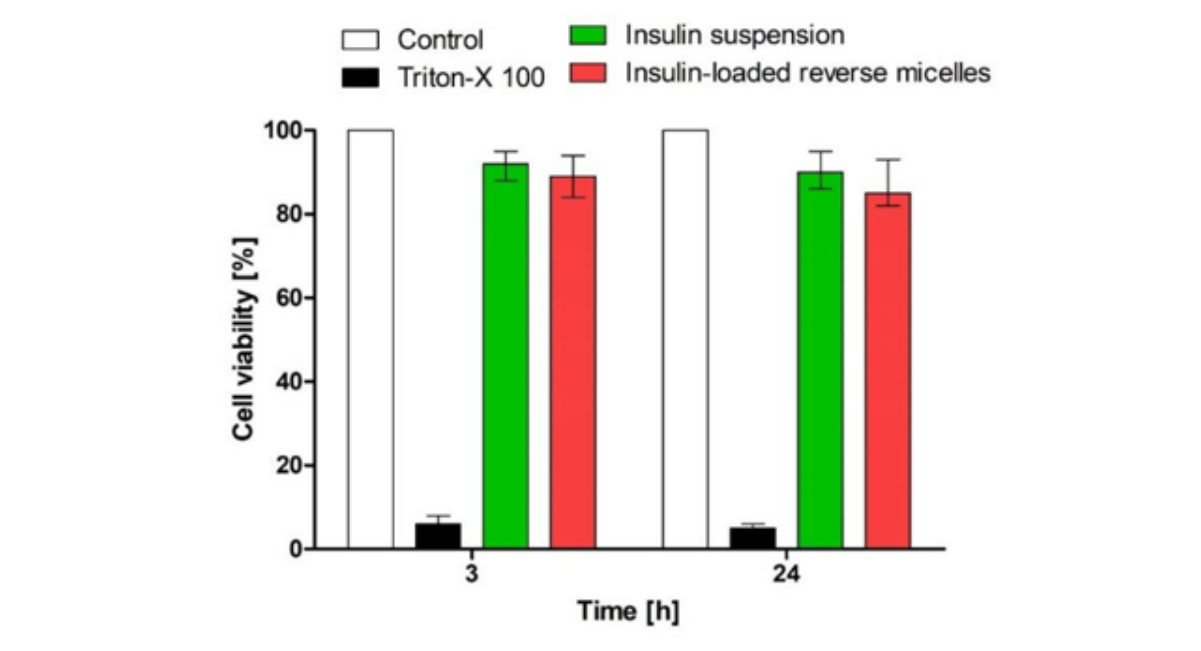
The safety of the insulin-loaded reverse micelles was assessed through an in vitro cytotoxicity assay using a standard MTT method. As illustrated Figure 1, both short-term (3 hours) and prolonged exposure (24 hours) maintained high cell viability, indicating excellent biocompatibility of the formulation.
Cell Viability VS Time
At the 3-hour mark, the control group showed 100% viability, while the positive control (Triton X-100), as expected, exhibited severe cytotoxicity (~7%), conforming the reliability of the assay. The insulin suspension and insulin-loaded reverse micelles determined strong safety with cell viability of 91.3 ± 2.5% and 88.7 ± 3.1%, respectively. After 24 hours, the viability slightly decreased, yet the values remained within acceptable limits: 89.1 ± 3.8% for insulin suspension and 85.2 ± 4.1% for reverse micelles.
In Vitro Diffusion Study: Enhanced Permeation via Reverse Micelles
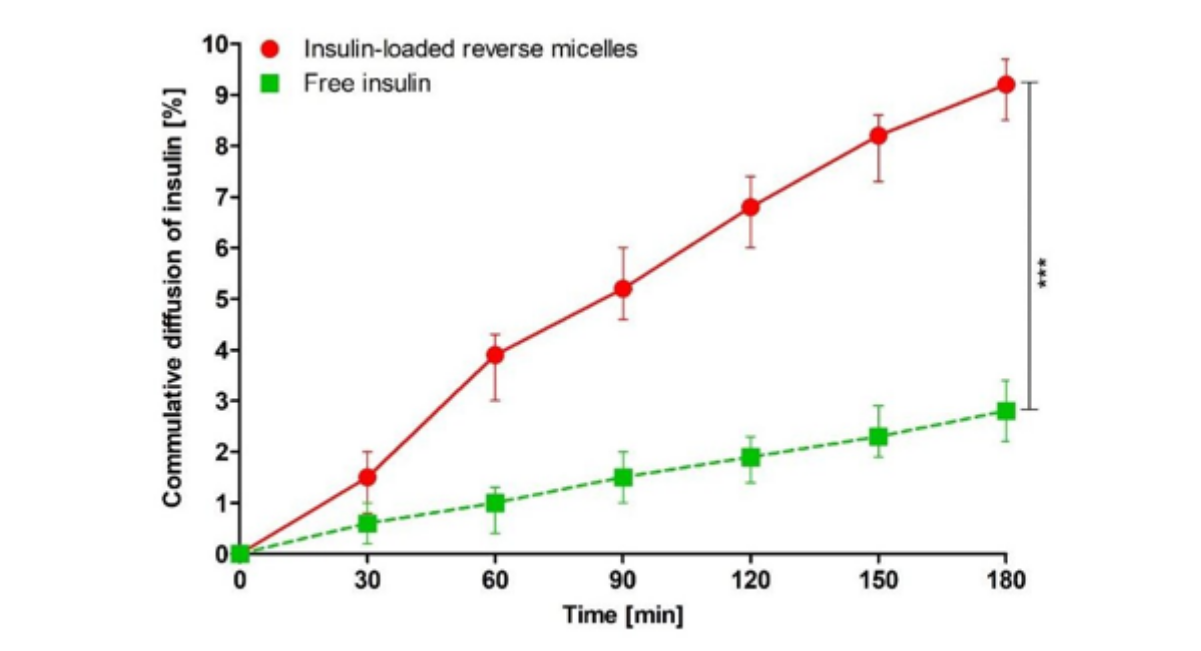
The in vitro diffusion behavior of free insulin and insulin-loaded reverse micelles were evaluated using a synthetic membrane to mimic intestinal conditions. As presented in Figure 2, the reverse micelles demonstrated a markedly improved diffusion profile over the entire 180-minute study period.
Cumulative diffusion vs Time
Within the first 30 minutes, the insulin released from reverse micelles was 1.5%, while free insulin released was 0.6%. This difference expanded with time, reaching 9.3 ± 0.4% for reverse micelles and only 2.5 ± 0.3% for free insulin at 180 minutes. enhancement in permeation was statistically significant (p < 0.001).
DISCUSSION
The nanometric characteristics of the developed reverse micelles confirm that the system is well-suited for enhancing oral bioavailability of insulin, a traditionally known drug limited by poor gastrointestinal stability and permeability. The small size favors both paracellular transport and lymphatic uptake, thus helping to bypass hepatic first-pass metabolism. The consistently high cell viability (>85%) further demonstrates the formulation’s safety and biocompatible, even after prolonged exposure. This supports its potential for chronic oral administration. The slight reduction at 24 hours falls within the expected limits and does not indicate any significant cytotoxicity.
- The formulation’s compatibility can be attributed to the use of GRAS (Generally Recognized As Safe) excipients commonly used in SNEDS. The dramatic enhancement in diffusion observed with the reverse micelle formulation highlights its superior permeability-enhancing properties. Several mechanisms likely contribute to this:
- Nano-sizing reduces diffusion barriers and increases surface area for absorption.
- Encapsulation within reverse micelles protects insulin from enzymatic degradation in the GI tract.
- Surfactants in SNEDS may transiently open tight junctions and improve paracellular transport.
- The amphiphilic nature of reverse micelles enhances insulin solubility and mucosal penetration.
These findings suggest that the SNEDS-based reverse micelle system can overcome two major barriers in oral insulin delivery: enzymatic degradation and poor intestinal permeability. The developed formulation successfully achieved nanoscale dimensions (172 ± 18 nm) with a low polydispersity index (0.301 ± 0.02), indicating uniformity and stability. The near-neutral zeta potential (+1.38 mV) suggested reduced risk of aggregation and good compatibility with intestinal absorption pathways. Importantly, insulin integrity was preserved during encapsulation, as demonstrated by FTIR, DSC, and morphological analysis, confirming that the formulation process did not compromise protein structure.
Biocompatibility and safety were validated through MTT assays, with >85% cell viability across 24 hours, supporting the non-toxic nature of the formulation. This aspect is crucial since surfactant based carriers often raise concerns about cytotoxicity; however, the use of pharmaceutically acceptable excipients (Span 80, Brij, and Miglyol) ensured safety at optimized concentrations [20].
Functionally, in vitro diffusion studies revealed a 3.7-fold enhancement in insulin permeation compared to free insulin. Similarly, ex vivo intestinal studies with goat intestine confirmed improved mucosal transport, likely facilitated by the nanoscale size, surfactant-mediated permeation enhancement, and protective encapsulation that minimized enzymatic degradation. These findings align with literature demonstrating that reverse micelles enhance peptide stability, solubility, and intestinal uptake.
Despite these promising outcomes, certain challenges remain. The formulation showed a relatively modest zeta potential, which may affect long-term storage stability under stressed conditions. Moreover, while in vitro and ex vivo results are encouraging, in vivo pharmacokinetic and pharmacodynamic evaluations are essential to confirm systemic absorption, bioavailability, and glycemic control. Additionally, variability in gastrointestinal physiology, food effects, and potential excipient-related regulatory hurdles represent real-world barriers to clinical translation. Overall, this study demonstrates that dRMs within SNEDDS can overcome critical barriers of oral insulin delivery, namely enzymatic degradation, poor permeability, and first-pass metabolism.
The system holds promise as a scalable, safe, and effective oral insulin platform, potentially transforming diabetes management by reducing reliance on injections and improving patient adherence. However, future research must focus on in vivo validation, optimization for large-scale manufacturing, and Regulatory considerations to enable clinical translation.
CONCLUSION
The experimental results strongly support the hypothesis that mixed dry reverse micelles incorporated into a SNEDS platform represent a highly promising approach for oral insulin delivery. The formulation displayed desirable nanoscale characteristics, excellent biocompatibility, and a 3.7-fold increase in cumulative insulin diffusion compared to free insulin. These outcomes suggest that such system has the potential to transform insulin therapy, potentially replacing injections with non-invasive oral alternatives. However, further in vivo studies and pharmacokinetic evaluations are necessary to validate these in vitro results particularly regarding systemic absorption and glycemic regulation. The study supports the potential of mixed dry reverse micelles as an effective oral insulin delivery platform, characterized by enhanced permeability, biocompatibility, and formulation stability. These findings open the door for further in vivo studies to validate the system's clinical applicability and bioavailability. This study not only demonstrates the feasibility of using mixed dry reverse micelles for oral insulin delivery but also establishes a foundation for future translational research in diabetes management.
REFERENCES
- Lv Y, Cai F, He Y, Li L, Huang Y, Yang J, Zheng Y, Shi X. Multi-crosslinked hydrogels with strong wet adhesion, self-healing, antibacterial property, reactive oxygen species scavenging activity, and on-demand removability for seawater-immersed wound healing. Acta biomaterialia. 2023;159:95-110. [Crossref] [Google Scholar]
- Sandmeier M, Ricci F, To D, Lindner S, Stengel D, Schifferle M, Koz S, Bernkop-Schnürch Design of self-emulsifying oral delivery systems for semaglutide: reverse micelles versus hydrophobic ion pairs. Drug delivery and translational research. 2025 (6):2146-61.[Crossref] [Google Scholar]
- Li CL, Deng YJ. Oil‐based formulations for oral delivery of insulin. Journal of pharmacy and pharmacology. 2004 (9):1101-7. [Crossref] [Google Scholar] [PubMed]
- Wang, F., Ma, Y., & Chen, G. (2010). Lyophilized water-in-oil emulsions for oral delivery of proteins and peptides: Development and evaluation. European Journal of Pharmaceutics and Biopharmaceutics, 76(2), 215–223. [Google Scholar]
- Narang AS, Delmarre D, Gao D . Stable drug encapsulation in micelles and microemulsions. International journal of pharmaceutics. 2007;345(1-2):9-25. [Crossref] [Google Scholar] [PubMed]
- Bose A, Roy Burman D, Sikdar B, Patra P. Nanomicelles: Types, properties and applications in drug delivery. IET nanobiotechnology. 2021;15(1):19-27. [Crossref] [Google Scholar]
- Zhang, J., et al. (2018). ARM lecithin nanoparticles/PLGA composite microspheres. [Crossref]
- Cui, F., Shi, K., Zhang, L., Tao, A., Kawashima, Y., & Bi, D. (2006). Biodegradable nanoparticles loaded with insulin–phospholipid complex for oral delivery: Preparation, in vitro characterization and in vivo evaluation. Journal of Controlled Release, 114(2), 242–250. [Crossref] [Google Scholar] [PubMed]
- Ricci F, Lindner S, Summonte S, Holm R, Sun D, Washburn N, Michalowski CB, Di Pretoro G, Bernkop-Schnürch Mixed dry reverse micelles: potential carriers for oral protein delivery via SEDDS. Drug Delivery and Translational Research. 2025 (9):3307-20. [Crossref] [Google Scholar]
- Schmidt, R. (2025). Comparative evaluation of hydrophobic ion pairing and dry reverse micelles for oral peptide delivery. European Journal of Pharmaceutics and Biopharmaceutics, 187, 102–112. [Crossref] [Google Scholar]
- Al-Tahan, F. (2025). Reverse micelle systems for peptide stabilization: Applications in oral drug delivery. Journal of Pharmaceutical Sciences, 114(3), 560–572.
- Buya, A. B., Ueckert, T., & Rashid, M. (2020). Self-nanoemulsifying drug delivery systems (SNEDDS) as carriers for oral peptide delivery: Current challenges and emerging approaches. Drug Delivery and Translational Research, 10(5), 1127–1143. [Crossref]
- Lin, W., Wu, J., & Li, H. (2023). A reverse micelle/SNEDDS hybrid nanoplatform for enhanced oral insulin delivery: Overcoming mucus and epithelial barriers. International Journal of Nanomedicine, 18, 515–529. [Google Scholar]
- Yu J, Meng X, Dong X, Han M, Li G, Chen Y, Liu Y, Hu L. Synthesis and characterization of osmotic pump capsules containing polyoxyethylene and pH modifier to control the release of nifedipine. European Journal of Pharmaceutics and Biopharmaceutics. 2021;163:102-8. [Crossref] [Google Scholar]
- Bruce ES, Lunt L, McDonagh JE. Sleep in adolescents and young adults. Clinical medicine. 2017 Oct 1;17(5):424-8. [Google Scholar] [PubMed]
- Buickbedadan, S., Aklilu, A., & Abebe, T. (2022). Polymeric micelles and self-nanoemulsifying drug delivery systems for oral insulin: A review of advances and challenges. Frontiers in Pharmacology, 13, 1084223
- Jones SA, Martin GP, Brown MB. Stabilisation of deoxyribonuclease in hydrofluoroalkanes using miscible vinyl polymers. Journal of controlled release. 2006 ;115(1):1-8. [Crossref] [Google Scholar] [PubMed]
- Karpińska O, Baranowska-Kuczko M, Kloza M, Kozłowska H. Endocannabinoids modulate Gq/11 protein-coupled receptor agonist-induced vasoconstriction via a negative feedback mechanism. Journal of Pharmacy and Pharmacology. 2018 ;70(2):214-22. [Crossref] [Google Scholar] [PubMed]
- Kastner E, Kaur R, Lowry D, Moghaddam B, Wilkinson A, Perrie Y. High-throughput manufacturing of size-tuned liposomes by a new microfluidics method using enhanced statistical tools for characterization. International journal of pharmaceutics. 2014 ;477(1-2):361-8. [Crossref] [Google Scholar]
- Li T, Chen H, Yang Z, Wei N, Zhang S, Mei X, Bai SF. Topical application of Pseudolaric acid B improve DNFB-induced contact hypersensitivity via regulating the balance of Th1/Th17/Treg cell subsets. European journal of pharmaceutical sciences. 2012 ;45(5):668-76 . [Crossref] [Google Scholar]
- Schmidt MR, Ebert ML, Kiechle MA, Zöller K, Laffleur F, Bernkop-Schnuerch A. Self-Emulsifying delivery systems for oral administration of exenatide: Hydrophobic ion pairs vs. Dry reverse micelles. International Journal of Pharmaceutics. 2025 Jun 10;678:125711 .[Crossref] [Google Scholar]
- Sharma G, Wilson K, Van der Walle CF, Sattar N, Petrie JR, Kumar MR. Microemulsions for oral delivery of insulin: design, development and evaluation in streptozotocin induced diabetic rats. European Journal of Pharmaceutics and Biopharmaceutics. 2010 ;76(2):159-69. [Crossref] [Google Scholar]
- ongoren B, Kara A, Serrano DR, Lalatsa Novel enabling strategies for oral peptide delivery. International Journal of Pharmaceutics. 2025 ;681:125888 . [Crossref] [Google Scholar]
- Wen J. Oral Delivery of Protein and Peptide drugs: Barriers and Strategies. [Crossref] [Google Scholar]
- Alai MS, Lin WJ, Pingale SS. Application of polymeric nanoparticles and micelles in insulin oral delivery. Journal of food and drug analysis. 2015 ;23(3):351-8. [Crossref] [Google Scholar] [PubMed]
- Nguyen TT, Duong VA, Maeng HJ. Pharmaceutical formulations with P-glycoprotein inhibitory effect as promising approaches for enhancing oral drug absorption and bioavailability. Pharmaceutics. 2021 ;13(7):1103. [Crossref] [Google Scholar]
- Marante T, Viegas C, Duarte I, Macedo AS, Fonte P. An overview on spray-drying of protein-loaded polymeric nanoparticles for dry powder inhalation. Pharmaceutics. 2020 ;12(11):1032. [Crossref] [Google Scholar] [PubMed]
- Lu Y, Wu L, Lin M, Bao X, Zhong H, Ke P, Dai Q, Yang Q, Tang X, Xu W, Xu D. Double layer spherical nanoparticles with hyaluronic acid coating to enhance oral delivery of exenatide in T2DM rats. European Journal of Pharmaceutics and Biopharmaceutics. 2023;191:205-18. [Google Scholar]
- Shah, R., et al. (2025). Barriers and strategies for oral peptide/protein therapeutics . [Crossref] [Google Scholar]
- Dattani S, Li X, Lampa C, Barriscale A, Damadzadeh B, Lechuga-Ballesteros D, Jasti BR. Development of spray-dried micelles, liposomes, and solid lipid nanoparticles for enhanced stability. Pharmaceutics. 2025;17(1):122. [Crossref] [Google Scholar]
- Wang M, Wang C, Ren S, Pan J, Wang Y, Shen Y, Zeng Z, Cui H, Zhao X. Versatile oral insulin delivery nanosystems: from materials to nanostructures. International journal of molecular sciences. 2022;23(6):3362. [Crossref] [Google Scholar]
- Sun, S., et al. (2024). Advancements in oral insulin: A century of research and the road ahead. [Crossref]