
Journal of Mental Health Research and Innovation

ABSTRACT
Generally, counseling provided by health care providers with little or no prior experience in the field of mental health is relied on as a means of psychological first aid for newly diagnosed PLWH. This is often not enough to mitigate the exceptional psychological strain during this critical window period. There is, however, a paucity of synthesized evidence regarding how AI has been integrated into psychosocial support systems for newly diagnosed PLWH, with an emphasis on the time of diagnosis, particularly within a low- and middle-income country like Nigeria. A scoping review will provide a detailed overview of the current state of research, intervention models and gaps in knowledge. Several literature were reviewed to explore the integration of AI in psychosocial support systems for newly diagnosed PLWH; searching databases such as Google Scholar, HINARI, PubMed, SCOPUS, and PsycINFO. Articles published between 2015 and 2025 were manually sorted ensuring no bias in the selection process. The Preferred Reporting Items for Systematic Reviews and Meta-Analyses extension for Scoping Reviews (PRISMA-ScR) checklist was used in this study. A total of 17 studies were assessed to examine the evidence on AI-based psychosocial interventions addressing anxiety and stress among newly diagnosed people living with HIV(PLWH). Studies from 2015 to 2025 spanning Asia, Africa, North America, and Europe were assessed; none originated from Nigeria. The AI tools identified included chatbots, mobile health applications, machine learning programs, and digital conversational agents designed for self-testing and psychological well-being. This review synthesized evidence that AI-based psychosocial interventions hold significant promise for addressing stress and anxiety among PLWH, while showing the gaps existing in the local adaptation and implementation of these interventions in the Nigerian context, suggesting a need for evidence-based AI integration into the country's HIV and mental health framework.
Keywords: Artificial Intelligence; Psychosocial Support; Anxiety; Stress; Hiv; Nigeria
INTRODUCTION
Background
The advent of antiretroviral therapy has increased hope for life preservation among people living with HIV (PLWH); however, the diagnosis of HIV continues to have substantial psychological and social consequences. Evidence indicates that quality of life may be significantly affected from the point of diagnosis, reflecting the psychological and social impact of living with the condition [1]. The period immediately following diagnosis is therefore a particularly important window for the provision of appropriate psychosocial support.
Counselling provided by healthcare providers with little or no prior experience in the field of mental health is often relied upon as a form of psychological first aid for newly diagnosed PLWH [2]. However, conventional counselling may be insufficient to mitigate the exceptional psychological strain experienced during this critical period. In low- and middle-income countries (LMICs) such as Nigeria, this challenge is further compounded by the continuous emigration of healthcare professionals and an inadequate doctor-to-patient ratio, making interventions that are heavily dependent on human resources difficult to scale and deliver in a timely manner [3].
Artificial intelligence (AI) is increasingly being applied within mental healthcare and has emerged as a potential tool for addressing some of these service-delivery challenges. Its applications include predictive analysis, digital counselling, emotion recognition, and patient engagement [4]. AI-based psychosocial interventions, including chatbots, algorithm-based screening systems, and virtual mental health assistants, have demonstrated potential for mitigating anxiety and stress at the global level [5]. Such technologies may provide accessible and scalable avenues for psychosocial support, particularly in settings where mental health resources are limited [6].
Despite these developments, there remains a paucity of synthesized evidence regarding the integration of AI into psychosocial support systems for PLWH, particularly in relation to anxiety, stress, and psychological distress. This gap is especially relevant to LMICs such as Nigeria, where the contextual applicability of technologies developed in other settings remains uncertain [7]. Differences in cultural and linguistic contexts, digital literacy, technological infrastructure, accessibility, and healthcare systems may influence the acceptability, feasibility, and effectiveness of AI-based psychosocial interventions [8].
A scoping review can therefore provide a comprehensive mapping of the existing evidence, including the range of AI-based psychosocial interventions that have been studied, their target populations, reported outcomes, strengths and limitations, and gaps in the current literature. Such evidence is particularly important for determining how existing AI-based interventions may be adapted to the Nigerian context and potentially integrated into HIV and mental health care systems [9].
This study therefore sought to map the available evidence on the integration of artificial intelligence into psychosocial support systems for people living with HIV, with particular attention to interventions addressing anxiety and stress. It further aimed to identify contextual and methodological gaps in the literature and explore the potential implications of existing evidence for the development of locally relevant, culturally appropriate, and context-specific AI-based psychosocial support systems within HIV care in Nigeria.
Research Questions
- What evidence exists on AI-based psychosocial interventions addressing anxiety disorder and
stress in people living with HIV? - What gaps exist in current literature as regards adapting these available AI systems in the
context of Nigerian mental health and HIV care? - How have AI tools (e.g., chat boxes, virtual counseling, predictive algorithms) been used to
address psychosocial distress in the general population of people living with HIV? - What are the strengths, limitations, and reported outcomes of these AI-based psychosocial
support systems? - How can future research improve the quality and relevance of evidence on artificial
intelligence integration in psychosocial support systems of vulnerable populations?
Aim of the Study
The aim of this study is to provide locally relevant, context-specific data that will encourage the
integration of artificial intelligence into psychosocial support systems, preventing anxiety
disorder and stress in newly diagnosed people living with HIV (PLWH).
Objectives
To identify the contextual and methodological gaps in existing literature relevant to
integrating artificial intelligence-based psychosocial intervention to prevent anxiety disorder
and stress in people living with HIV
- To investigate how AI tools have been used to address psychosocial distress in the general population of people living with HIV.
- To identify the strengths, limitations, and reported outcomes of these AI-based psychosocial support systems.
- To propose how future research can improve the quality and relevance of evidence on artificial intelligence integration into psychosocial support systems of vulnerable populations.
MATERIALS AND METHODS
Study DesignA scoping review was conducted following the PRISMA-SCR guidelines and using the Arksey and O’Malley methodological framework.
Data sourcesElectronic databases including PubMed, Google Scholar, HINARI, SCOPUS, and PsycINFO
Reference list of relevant papers.
Search strategy:
Searches were conducted using strings of keywords formed with Boolean operators.
Combinations include:
("Artificial Intelligence" OR "machine learning" OR "digital mental health") AND ("psychosocial support" OR "mental health intervention") AND ("stress" OR "anxiety") AND ("HIV" OR "PLHIV").
Eligibility CriteriaStudies exploring AI-based psychosocial interventions (qualitative, quantitative, or mixed- methods).
Studies addressing mental health, anxiety, or stress among PLHIV with the aid of digital tools/technology.
Studies within 10 years of publication written in English (2015-2025).
Data Extraction and SynthesisA data-charting form (literature review matrix) capturing details of the author, country,AI-based intervention used, target population, outcomes, and limitations was used.
The data was then analyzed thematically to identify major trends, target areas for intervention, and gaps in literature
OutcomeA scientific mapping of current evidence on AI-integrated psychosocial support systems for mental health disorders (especially anxiety and stress) in HIV populations. Identification of contextual and methodological literature gaps in LMICs such as Nigeria. A theoretical framework revealing potential ways for integrating AI-linked psychosocial support systems into HIV care programs of the newly diagnosed and a scholarly foundation for future empirical studies and policy formulation.
Timeline (5 Days)Day 1: Set up and development of database search strategy Literature search protocol
Day 2: Initial screening of research topics and abstracts Studies shortlisted
Day 3: Full-text review of selected topics and data extraction Literature review matrix
Day 4: Drafting of key findings Thematic synthesis of Analysis and summary
Day 5: Compilation of final abstract and proposal submission Completed research document.
MethodsSeveral literatures were reviewed to explore the integration of artificial intelligence in psychosocial support systems of people living with HIV (PLWH), searching databases such as Google Scholar, HINARI, SCOPUS, PubMed, and Psych INFO. The database were searched for articles related to the study's theme and specific articles selected are those that were relevant to our research objectives. Further searches were conducted using the following keywords:"artificialintelligence","psychosocialsupport","anxiety","stress","HIV","scopingreview.
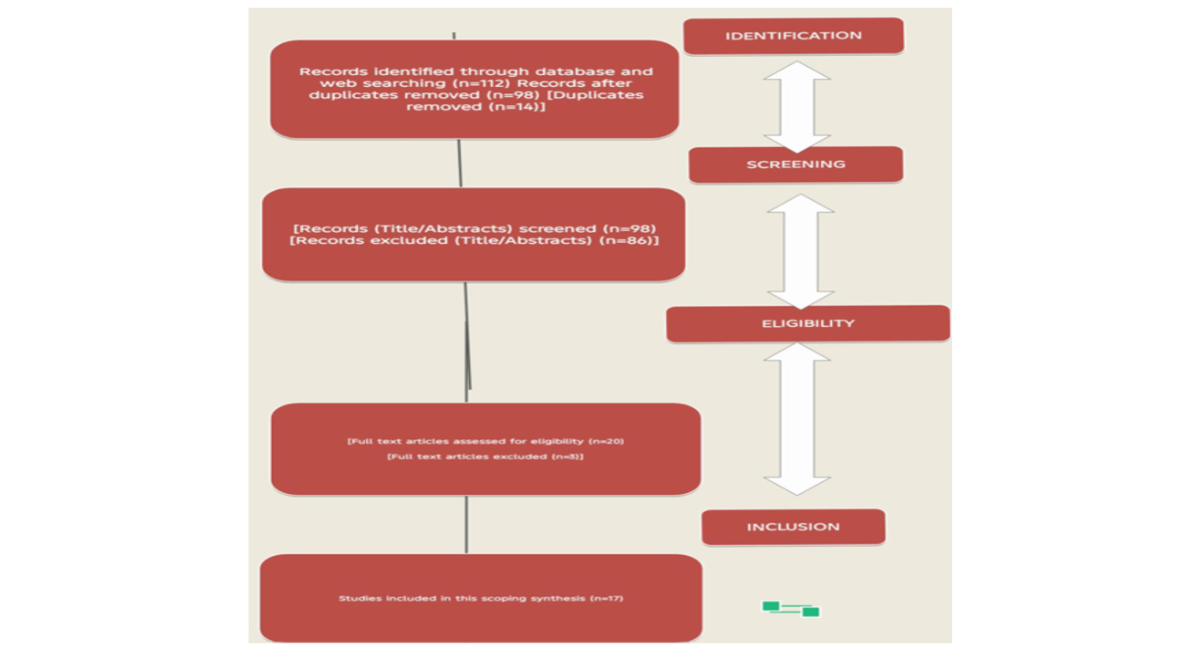
Articles published between 2015 and 2025 were manually sorted ensuring no bias in the selection process. The Preferred Reporting Items for Systematic Reviews and Meta-Analyses extension for Scoping Reviews (PRISMA-ScR) checklist was used in this study.
Inclusion and Exclusion CriteriaInclusion criteria : Studies centered on the main topic and utilizing relevant terminology.
Exclusion criteria : Research on similarity indices that didn't align with our topic of interest.
Studies on AI-tools that required human support.
PRISMA-ScR Flow Chart
LITERATURE REVIEW
|
S/N |
Study Title |
Authors |
Year |
Country |
AI-Based Tool |
Target Population |
Outcome |
Limitations |
|
1 |
Impact of a Watch-Based Hybrid Intervention on the Adaptation Outcomes of People Living with HIV/AIDS: A Randomized Controlled Trial |
Hong Hong Wang; Qin Qin et al. |
2025 |
China |
Hybrid intervention called AiCare (Adaptation Intervention) with comprehensive task-management framework to achieve normal life |
PLWH/A |
The AiCare program shows promise in improving disease adaptation outcomes among PLWH, notably by enhancing coping, acceptance of illness, and mitigating anxiety symptoms |
These findings underscore the hybrid program's potential to facilitate utility to adaptation of PLWH/A |
|
2 |
Evaluating an Innovative HIV Self-Testing Service with Web-Based Remote Counseling, provided by an AI chatbot (HIVST-chatbot) in increasing HIV self-testing use among Chinese men who have sex with men: A randomized controlled trial |
Siyu Chen et al. |
2023 |
Hong Kong |
HIV-ST chatbot with web-based real-time counseling |
Chinese-speaking men at risk |
Established protocol for randomized trial of CNT chatbot delivering real-time pretest and posttest counseling using HIV testing |
Protocol focused on HIV self-testing uptake and proper needing counseling; AI itself is not primary clinical endpoint |
|
3 |
The feasibility and acceptability of an mHealth conversation Agent to support HIV self-testing in South Africa: a cross-sectional study |
Ntina XM Keter AK, et al. |
2022 |
South Africa |
NolwaziBot, an isiXhosa-speaking conversational agent designed to support HIV self-testing with counseling in KwaZulu style |
120 consenting adults |
Approximately 1/5th of participants who were sent an HIV-self test guided by the chatbot stated positive. Most participants indicated that their testing experience was acceptable and better than a human counselor. Many participants reported that they preferred it as if talking to a real person; stating that the respect, tone and word choice of NolwaziBot reminded them of how they speak in daily conversation |
Doesn't measure anxiety and treats mental health outcome. The AI-based intervention wasn't written in English |
|
4 |
Digital health interventions for depression and Anxiety in LMIC: Rapid scoping review |
Leepa W. Chau et al. |
2025 |
Canada |
Wysa (AI-enabled chatbot-based app), Mobile apps etc. |
— |
Evidences addressing digital health intervention for depression & Anxiety in LMIC |
A comprehensive presentation of existing digital mental health interventions for depression and anxiety, including their feasibility, usability, cultural adaptation, and challenges to facilitators of their uptake in LMIC |
|
5 |
Mental Health Interventions for young people living with HIV/AIDS in Sub-Saharan Africa: systematic review |
Samuel Adjorlolo et al. |
2025 |
Ghana |
Studies that evaluated psychosocial and mental health intervention aimed at improving mental health outcomes (depression, anxiety, and ART adherence) |
Young people living with HIV |
This review showed promising to improve mental health in PLWH/A mainly for depression, anxiety, and family/behavioral digital-based (digital psychosocial) approaches |
Positive results for anxiety but insufficient evidence base; varied measurement approaches, necessitating more empirical studies across |
|
6 |
Digital mental health interventions for adolescents and young people (10–24 years) in Africa: a protocol for a systematic review of mental health outcomes, engagement and equity considerations |
Aggrey & Gisiora et al. |
2025 |
South Africa |
Evidences on DMHI targeting adolescents & young people in Africa, focusing on mental health outcomes, engagement, feasibility, and equity considerations |
Adolescents and young people (AYP) in Africa |
Inform the development, implementation, policy integration of digital mental health strategies tailored to young populations in diverse African context |
This is a protocol, not a study |
|
7 |
Technology-Delivered Mental Health Interventions Review of Recent Advances |
Mirjam-Collette Kempf et al. |
2015 |
Birmingham, USA |
Computerized Cognitive Behavioral Therapy (cCBT), e.g. MoodGYM, COPE, Beating the Blues |
Evidence within the context of HIV infection and mental health co-morbidities |
Provides evidence for intervention efficacy, especially in those using CBT-based interventions |
Significant gaps in technology use among PLWH; psychological distress were evident, while most of the time based on technological intervention interaction faced dissemination and implementation barriers |
|
8 |
Understanding Digital Mental Health Needs, and Usage with an AI-led mental health App (WYSA), during the covid-19 pandemic: Retrospective analysis |
Chaitali Sinha et al. |
2022 |
UK; India; USA |
Digital Mental health application (WYSA) |
General Population |
Aimed at building resilience; included conversational agents and various evidence based intentional tools such as cCBT |
Retrospective Observational Study |
|
9 |
The first AI-based chatbots to promote HIV self management. A mixed methods usability study |
Mirko Casu et al. |
2024 |
Italy |
AI chatbots |
Studies showing AI Chat bots applications in mental health |
It highlights potential of AI chatbots to provide accessible and scalable mental health interventions |
Very few anxiety/stress oriented interventions in vulnerable populations like PLWH |
|
10 |
The impact of Generative Conversational Artificial Intelligence on LGBTQ-: Scoping Review |
Bragazzi NL. et al. |
2023 |
Canada; USA; Italy; Israel |
AI related chatbots that provide counseling or trained in role-play (REALbot, Tough Talks, HIVST-CB) |
Studies discussing chatbots linked to PLWH and at risk |
It mapped existing AI projects linked to PLWH/HIV mental health support |
Many included studies are Feasibility and/or accessibility studies, few anxiety or stress outcome trials |
|
11 |
Evaluating the usability of an HIV prevention AI chatbot in Malaysia: National observational study |
Zhao Ni et al. |
2025 |
Malaysia |
Web-Based AI chatbot |
Men who have sex with men (MSM), Population at risk for HIV |
demonstrated high usability in delivering HIV self testing kit and providing clinical information on HIV self testing, PrEP, and mental health services |
it is a feasibility and accessibility study, nil interventions |
|
12 |
Inferring Opinions and Behavioral characteristics of Gay men with Large scale Multilingual Text from Blued |
Ge Huang et al. |
2019 |
China |
Machine Learning and Linguistic Program: approach is to extract themes and analyze sentiments of post |
MSM (Population at risk for HIV) |
Findings suggest an opportunity and necessity for researchers and public health practitioners to use open source data on GSN apps and other social media platforms to inform HIV interventions and promote social inclusion for sexual minorities |
It is a surveillance study, no psychosocial assessment or interventions |
|
13 |
A feasibility study to develop and test a Cognitive Behavioral Stress Management (CBSM) Mobile Health Application for HIV-Related Fatigue. |
Baros j. et al. |
2019 |
USA |
Cognitive Behavioral Stress Management Mobile Health Application |
PLWH |
Intervention was found to be credible and acceptable. reported few barriers to treatment participation |
Though a technology based intervention was used to tackle stress/fatigue in PLWH, it is not AI or ML-driven |
|
14 |
Artificial Intelligence in Mental Health Care: A systematic review of diagnosis, monitoring and Intervention Applications |
Cruz-Gonzalez P. et al. |
2025 |
Spain / China |
Support Vendor machine for diagnosis, machine learning for monitoring, and AI chatbot for Intervention |
Studies exploring AI-based applications for mental health |
A summary of different AI applications (Diagnosis, Monitoring, Intervention efficacy) |
It excluded conference papers which may have limited the scope of the review, potentially obviating important advancement in AI tools for mental health presented at conferences |
|
15 |
A Digital based technology (DBT)-informed mHealth intervention to enhance coping skills and mental Health among MSM living with HIV in China |
Wang L. et al. |
2025 |
China |
Culturally tailored dialectical behavioral therapy-informed mHealth intervention |
MSM living with HIV in China |
The intervention shows promise in reducing depression and emotional regulation difficulties |
It is a mixed-method feasibility pilot study; it warrants further investigations through definitive trials |
|
16 |
The first AI-based chatbots to promote HIV self-management. A mixed-method usability study |
Yunchao Ma et al. |
2024 |
Montreal, Canada |
MARVIN — AI-based chatbot that provides 24/7 expert-validated information on self-management-related topics for PLWH |
Enrolled PLWH |
1. Feasibility of using MARVIN 2. Usability as Acceptability 3. Four usability sub-constructs (Perceived ease of use, perceived usefulness, attitude towards use & behavioral intention to use) |
No mental health outcomes were accessed |
|
17 |
Testing feasibility of an HIV prevention AI-chatbots in Malaysia: National observational study |
Min Hui Cheah et al. |
2023 |
Malaysia |
Web-based AI-chatbot |
MSM (Population at risk of HIV) |
Demonstrated high feasibility in providing clinical information on HIV testing, PrEP, & mental health service |
Feasibility study |
RESULTS AND DISCUSSION
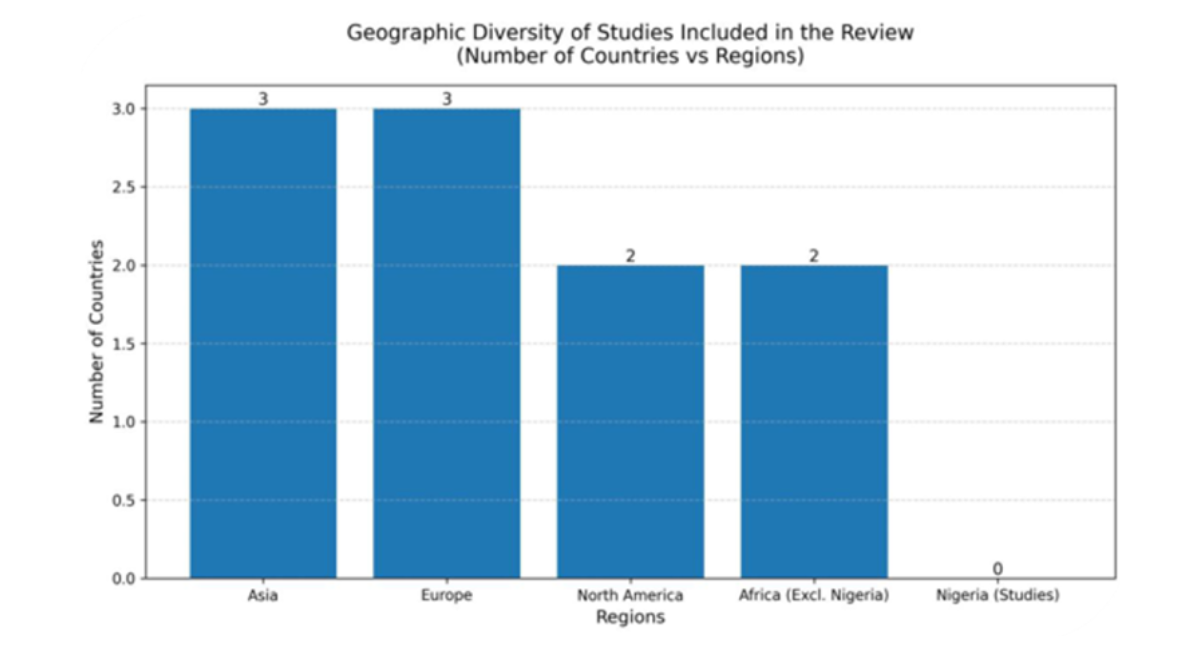
Geographic Diversity of Included Studies
This bar chart visualizes the distribution of the 17 reviewed studies by region, based on the
Estimated Predominance of AI Tools
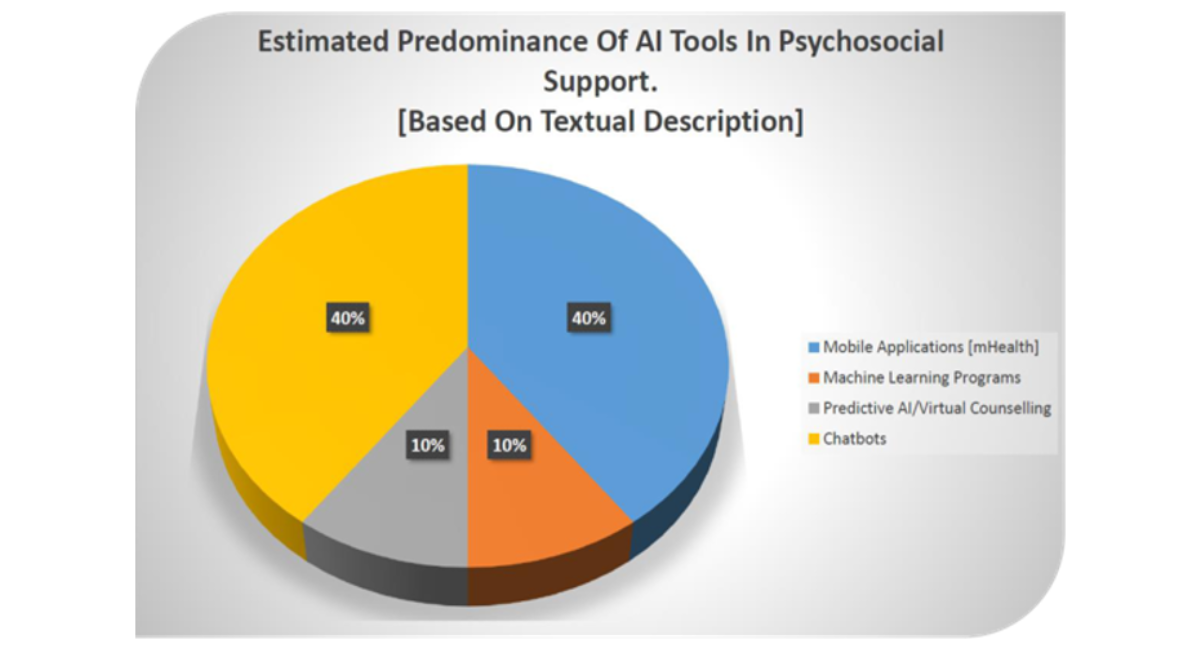
This pie chart illustrates the relative focus on different types of AI tools identified in the studies, showing that chatbots and mobile applications are the predominant modalities. The percentages are estimated based on the textual emphasis.
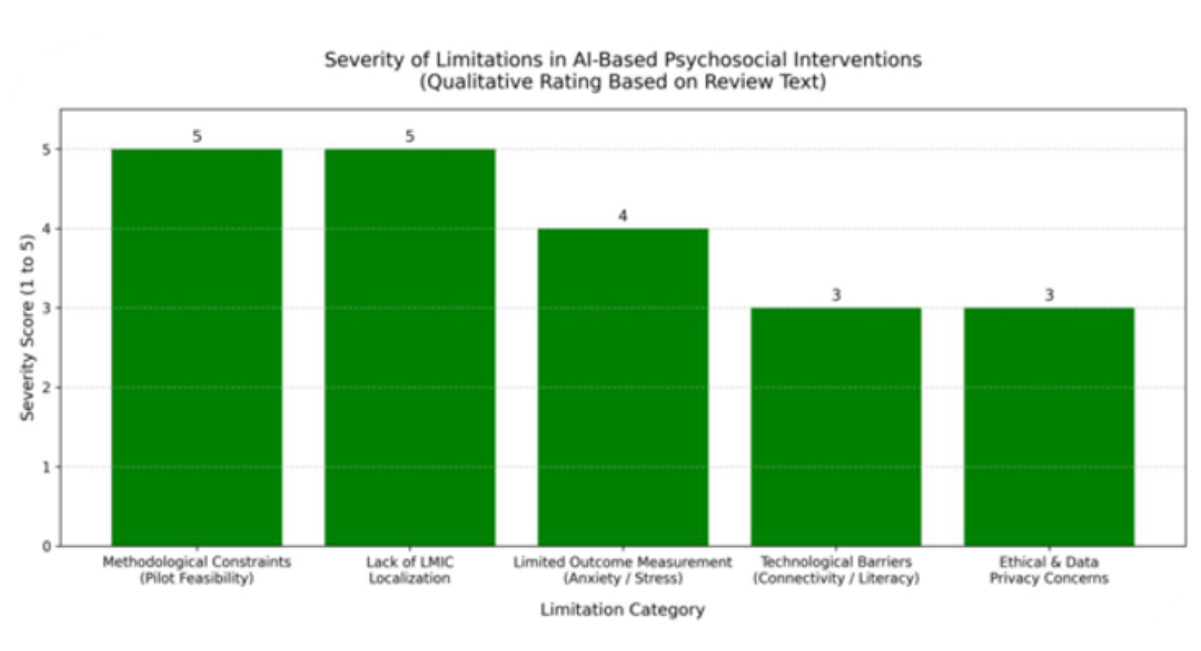
Severity of Key Limitations
This bar chart provides a qualitative assessment of the methodological and contextual limitations discussed in the review, based on the emphasis given in the text. The highest-rated limitations concern the study design (feasibility/pilot) and the lack of localization for LMICs.
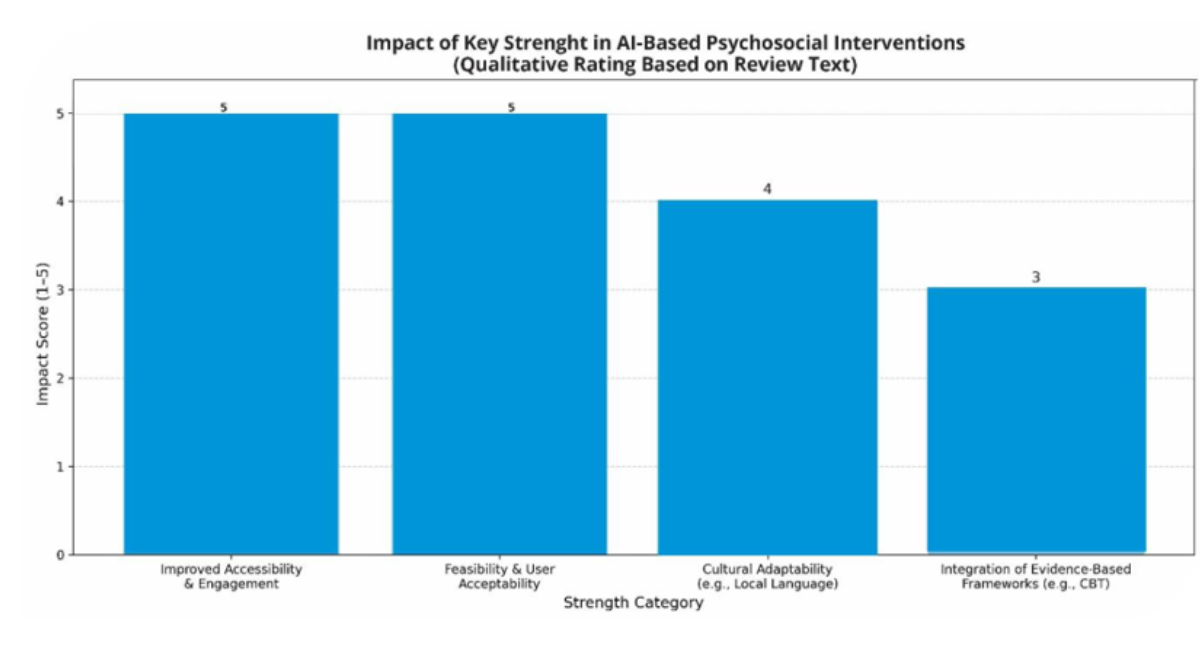
Impact of Key Strengths
This bar chart summarizes the positive attributes of the AI interventions, indicating that improved accessibility, engagement, and user acceptability are the highest-impact strengths identified across the reviewed studies.
Overview of Included Studies
In total, 17 studies were reviewed to explore the evidence on artificial intelligence (AI)-based psychosocial interventions addressing anxiety and stress among people living with HIV (PLWH). The studies spanned across continents including Asia (China, Malaysia, Hong Kong), Africa (South Africa, Ghana), North America (Canada, USA), and Europe (Italy, Spain, UK). There was however no study originating from Nigeria [8]. Majority of the studies were conducted between 2019 and 2025, showing the rise with time of contemporary evidence on the relevance of AI in mental health care [10].
The AI tools identified included chatbots, mobile health (mHealth) applications, machine learning programs, and digital conversational agents designed to promote adherence, self-testing, or psychological wellbeing [11]. People living with HIV (PLWH), men who have sex with men (MSM), and young people at risk of HIV infection made up the larger proportion of the target population in the studies.
Evidence on AI-Based Psychosocial Interventions for Anxiety and Stress in PLWH
The potential of AI-driven interventions to address psychosocial distress was demonstrated by multiple studies [12]. For instance, Wang evaluated the AICare hybrid intervention in China and reported improvements in disease adaptation, quality of life, and reduction of anxiety symptoms among [1]. Similarly, Barroso, found that a Cognitive Behavioral Stress Management (CBSM) mobile application enhanced coping skills and was well accepted by users [13].
Digital interventions utilizing mental health applications, such as Wyssa and CBT-based mHealth tools, were shown to effectively reduce symptoms of depression and anxiety in low- and middle-income countries (LMICs) [14]. Moreover, the systematic review by Adepoju likewise Adjorlolo in Sub-Saharan Africa highlighted promising evidence that AI-based psychosocial therapies and digital psychological interventions, can improve mental health outcomes and adherence to antiretroviral therapy (ART) [15].
It was however observed that most of the interventions were feasibility or pilot studies, with limited randomized controlled trials (RCTs) measuring anxiety and stress as primary outcomes. Clinical efficacy of interventions was not well emphasized with many studies rather focusing on usability, feasibility, and user engagement [15]. Thus, while AI-based psychosocial interventions demonstrate strong potential, there is paucity of robust empirical evidence.
AI Tools Applied in Psychosocial Support for PLWH
Chatbots were the predominant AI-tool identified in this study. The NoIwazi and MARVIN chatbots in South Africa and Canada respectively were designed to deliver HIV self-testing support and psychosocial counseling. Worthy of note is the Nolwazi bot local language (IsiZulu) interface and conversational tone, which enhanced user acceptability and trust [16]. Participants reported feeling understood “as if talking to a real person,” highlighting the importance of cultural adaptation in building AI systems.
Similarly, users of MARVIN and REALbot had round the clock access to expert-validated information and counseling, encouraging engagement and self-management [17]. The predictive analytics potential of mental health surveillance by machine learning algorithms were also used to analyze behavioral and emotional expressions in online text data from HIV-related social networks [13].
Predictive AI systems and virtual counseling algorithms however remain underutilized when compared to chatbots in spite of these advancements [18]. This underutilization of diverse AI tools suggests a primitive era of integration of artificial intelligence into psychosocial support frameworks for PLWH [19].
Strengths and Limitations of AI-Based Psychosocial Systems
Strengths demonstrated in the review include:
Improved accessibility and engagement: Especially suitable for stigmatized population as AI tools provide all day long support and confidentiality [20].
Feasibility and user acceptability : Positive user experiences and high feasibility scores were consistently demonstrated across many studies [2].
Cultural adaptability: AI systems that integrated local languages and contextual cues, (e.g., NoIwazi chatbot) significantly improved acceptability [16].
Integration of evidence-based frameworks: Better psychosocial outcomes were observed with tools that incorporated evidence-based principles like cognitive behavioral therapy (CBT) and dialectical behavioural therapy (DBT) [19].
Limitations that were evident include:
Methodological constraints: Only a few studies employed control groups or long-term follow ups,most of the others were cross-sectional or pilot designs [21].
Limited outcome measurement: Studies measuring anxiety and stress as primary outcomes were rare, HIV self-testing, engagement, or adherence is often the focus.
Technological and infrastructural barriers: As observed in many of the studies, the interventions required high internet connectivity, smartphone ownership, and digital literacy [6].
Lack of localization for LMICs: High and middle-income countries dominate in terms of AI-tools development, reducing their adaptation and contextual relevance to African settings [22].
Ethical and data privacy concerns: As shown in several studies, AI-mediated counseling holds potential confidentiality risks and mistrust [4].
These limitations emphasize that despite the promising potentials of AI-systems, their evidence base remains primitive, and their adaptation in the context of LMIC like Nigeria is urgently needed [8].
Gaps in Literature Relevant to Nigeria
The most critical gap is the paucity of contextual evidence evaluating AI-based psychosocial interventions for PLWH in Nigeria [6]. Despite a high burden of HIV and increasing digital health interest there was no identifiable study conducted in Nigeria during the course of this review. This emphasizes the need for locally driven research that integrates cultural, linguistic, and infrastructural factors [8].
It was also observed that there is lack of integration of AI tools into existing psychosocial support systems within HIV clinics. Most reviewed interventions were digital platforms operating independently with insufficient link to mental health professionals or ART adherence counselors [23]. Also, it was difficult to generalize findings in the context of mental health as only few interventions assessed stress and anxiety outcomes quantitatively. Lastly, there is a poor articulation of data policies and ethical frameworks for AI in health across African studies, this poses a barrier to the acceptability and sustainability of digital interventions [6].
Implications for Future Research
There is need for the development of AI-based psychosocial interventions that are culturally and linguistically adapted to Nigeria, Future studies should focus on integrating them into routine HIV care and mental health services [8]. Rigorous study designs, such as randomized controlled trials (RCTs), must be prioritized in doing this while employing validated measures of assessing psychological outcomes such as stress and anxiety among PLWH. Inter-professional collaborations between psychiatrists, computer scientists, behavioral researchers, and policy makers are also necessary to design scalable and ethical AI systems [20]. Furthermore, digital health literacy and capacity building among both clinicians and clients will enhance acceptability and sustainability [8]. Lastly, predictive algorithms and sentiment analysis tools should be incorporated in HIV care in order to enable early identification of psychosocial distress and develop preventive mental health strategies [24].
SUMMARY AND CONCLUSION
Summary of Findings
This review systematically analysed current evidence on Artificial Intelligence (AI)-based psychosocial interventions aimed at addressing anxiety and stress among people living with HIV (PLWH). It also reveals contextual and methodological gaps relevant to the integration of these interventions in the Nigeria's mental health framework and HIV care clinics. 17 Literature published between 2015 and 2025 were thoroughly reviewed, they covered regions including China, South Africa, Canada, the United States, Malaysia, Ghana, Spain, Italy and the United Kingdom. No study originated from Nigeria despite the progress of digital health globally, highlighting a significant regional research gap.
The studies revealed that AI-based interventions notably chatbots, mobile health mHealth applications, and machine learning tools were increasingly employed to provide mental health and psychosocial support to PLWH and populations at risk of HIV infection. These tools were beneficial in terms of facilitating HIV self-testing, providing digital counseling, treatment monitoring, and emotional well-being support.
Majority of the interventions demonstrated positive psychosocial impact reduced anxiety, improved coping mechanisms, and better engagement with HIV care were noted. For example, the AI Care hybrid intervention improved disease adaptation and quality of life among PLWH, while the Cognitive Behavioral Stress Management (CBSM) mHealth App enhanced stress coping mechanisms. In addition, DBT-informed mHealth tools were effective regulating emotion and reducing depressive symptoms among men living with HIV in China. The evidence base remains limited despite these promising benefits due to methodological inadequacies, including small sample sizes, feasibility-focused designs, and lack of rigorous randomized controlled trials (RCTs). Also, while most studies focused on usability and feasibility, clinically validated mental health outcomes such as stress and anxiety levels were not well prioritized.
From the NoIwazi chatbot report in South Africa, it was shown that high user satisfaction was achieved because it communicated in the local IsiZulu language and imitated participants’ conversational tone. Hence, cultural and linguistic contextualization emerged as a critical success factor. This underscores the importance of designing AI systems that align with users’ cultural identity and communication patterns a key point for potential adaptation in Nigeria.
Absence of studies conducted in Nigeria reveals significant gaps in both clinical practice and research. While the country faces a high burden of HIV and rising cases of psychosocial distress among newly diagnosed individuals, there is little empirical data to support AI integration into psychosocial support systems [8].
CONCLUSION
According to findings presented in this study, AI-based psychosocial interventions have a lot of potential in offering support to PLWH regarding their mental and emotional health. Interventions such as AI chatbots, virtual counseling platforms, and mHealth applications have demonstrated feasibility, potential efficacy and acceptance in enhancing coping skills, decreasing psychological distress, and improving ART adherence. However, there were no locally specific, non-preliminary evidence supporting these benefits. As most of the studies originate from high-income countries, limited representation from low-income countries like Nigeria was also conspicuous. This disparity suggests the urgent need for contextually adapted AI-driven interventions that incorporates linguistic diversity, digital literacy, and infrastructural realities.
It also shows how mental health service gap can be bridged by AI integration into psychosocial support systems for HIV care in Nigeria by providing accessible, confidential, and scalable interventions. With Nigeria’s expanding digital health policies and smartphone utility AI-driven solutions could complement human counseling and betterment of care.
Nevertheless, inter- sectoral collaboration between mental health professionals, computer scientists, public health experts, and policymaker will contribute to successful implementation. Also, ethical considerations including data privacy, informed consent, algorithmic fairness, and accountability must be addressed to ensure confidentiality and boost responsible AI deployment.
To conclude, AI-based psychosocial interventions offer a game-changing chance to transform the HIV care and mental health landscape in Nigeria. Considering how healthcare workers in Nigeria and other LMIC can benefit from the reduced burnout and improved mental health status among people living with HIV (PLWH), adapting global innovations to local realities will enhance the resilience of the healthcare system.
RECOMMENDATIONS
Research Recommendations
Conduct Context-Specific Studies in Nigeria:
Future studies about AI-based psychosocial intervention should be tailored to Nigerian sociocultural and linguistic contexts. Tools should be sensitive to the local communication styles and should incorporate native languages (e.g. Hausa,Igbo,Yoruba).
Adopt Rigorous Research Designs: National health policy and evidence base will be strengthened when empirical studies move beyond feasibility to randomised controlled trials (RCTs) with validated assessments of psychological outcomes (stress, anxiety and coping).
Integrate AI Tools within Clinical and Community-Based Psychosocial Systems: Rather than being isolated digital platforms, the sustainability of care can be promoted when AI tools are embedded into existing psychosocial support systems and ART adherence programs within HIV care clinics.
Advance Predictive and Personalized AI Models: Proactive mental health interventions can be promoted when future research go beyond chatbots and explore machine learning algorithm that can detect early cues of psychosocial distress from text, voice or behavioral data.
Ethical and Data Governance Frameworks: National ethical guidelines should be established for AI use in mental health and HIV care, with focus on confidentiality, and data protection to maintain patient security and compliance [23].
Policy and Practice Recommendations
Incorporate AI into Nigeria’s Digital Health Strategy: AI-driven mental health interventions should be prioritized by the Federal Ministry of Health and National Agency for the Control of AIDS (NACA) to encourage broader digital health transformation.
Capacity Building for Health Professionals: Health practitioners and HIV counselors should be equiped with basic AI literacy, by developing training programs in support of this, they can be enabled to collaborate in the design and deployment of artificial intelligence.
Public-Private and Academic Partnerships: Universities, health agencies, and technology firms need to collaborate to create locally adaptable and affordable AI solutions for psychosocial support in HIV care.
Enhance Accessibility through Mobile Integration: To reach rural and underserved populations, AI-based psychosocial support tools should be optimized for offline functionality on smartphones by using mobile platforms requiring minimum or no data subscription.
Monitor and Evaluate Implementation Outcomes : Standard monitoring and evaluation frameworks should be established to assess effectiveness, compliance to ethics, and user satisfaction of AI-based interventions in a real Nigerian settings.
Implications for Psychiatry and Mental Health
AI can serve as a complementary tool for mental health professionals; it should not be seen as a total replacement. This way, service delivery can be improved and adherence to treatment can be improved among PLWH. The integration of AI into psychosocial support systems presents an evolving model in the field of psychiatry, thus opening an avenue for digital psychiatry which promotes remote psychological assessment and intervention in resource limited environments.
Final Remark
Artificial intelligence offers a unique opportunity to bridge the gap between mental health needs and service delivery among PLWH in Nigeria, including offering the much required psychological first aid at the time of diagnosis. Building on global evidence, future locally driven, ethically guided, and culturally attuned AI interventions can strengthen psychosocial resilience, prevent anxiety and stress, and ultimately improve the quality of life of people living with HIV.
ETHICAL CONSIDERATIONS
This study is a retrospective analysis of published datasets, hence ethical approval is not required. We however ensured proper citation, transparency and adherence to PRISMA-SCR reporting standards.
REFERENCES
- Wang H, Qin Z, Li Y, Duan Y, Lu Q, et al. Effect of a WeChat-based hybrid intervention on the adaptation outcomes of people living with HIV/AIDS: pilot randomized controlled trial. Journal of medical Internet research. 2025;27:e65268. [Crossref] [Google Scholar] [PubMed]
- Oliveira C, Pereira A, Vagos P, Nóbrega C, Gonçalves J, et al. Effectiveness of mobile app-based psychological interventions for college students: a systematic review of the literature. Frontiers in psychology. 2021;12:647606. [Crossref] [Google Scholar] [PubMed]
- Akinwumi AF, Solomon OO, Ajayi PO, Ogunleye TS, Ilesanmi OA, et al. Prevalence and pattern of migration intention of doctors undergoing training programmes in public tertiary hospitals in Ekiti State, Nigeria. Human Resources for Health. 2022;20(1):76. [Crossref] [Google Scholar] [PubMed]
- Dehbozorgi R, Zangeneh S, Khooshab E, Nia DH, Hanif HR, et al. The application of artificial intelligence in the field of mental health: a systematic review. BMC psychiatry. 2025;25(1):132. [Crossref] [Google Scholar] [PubMed]
- Zhong W, Luo J, Zhang H. The therapeutic effectiveness of artificial intelligence-based chatbots in alleviation of depressive and anxiety symptoms in short-course treatments: a systematic review and meta-analysis. Journal of affective disorders. 2024;356:459-69. [Crossref] [Google Scholar] [PubMed]
- Hanshaw G, Sullivan C. Exploring barriers to AI course assistant adoption: A mixed-methods study on student non-utilization. Discover Artificial Intelligence. 2025;5(1):178. [Crossref] [Google Scholar]
- Guidance WH. Ethics and governance of artificial intelligence for health. World Health Organization. 2021;1. [Crossref] [Google Scholar]
- Ojo JO, Ipinnimo TM, Afolayan AC, Adewoye KR, Erinomo OO, et al. Factors associated with willingness to use mHealth interventions for medication adherence among people living with HIV attending a tertiary hospital in sub-Saharan Africa. PLoS One. 2024;19(8):e0309119. [Crossref] [Google Scholar] [PubMed]
- Oluwagbemi OO, Onyeka E, Jatto A, Oluwagbemi FE, Smith S, et al. Multilingual voice-enabled informatics tools: Catalyst for equitable AI in HIV and HIV-comorbidity healthcare management. Plos one. 2025;20(10):e0332573. [Crossref] [Google Scholar] [PubMed]
- Adewuya AO, Abimbola S, Abdulmalik J, Shettima F, et al. A paradox of readiness?: diagnosing strategic implementation gaps for digital mental health in Lagos, Nigeria. International Health. 2026;18(4):658-67. [Crossref] [Google Scholar] [PubMed]
- Li H, Zhang R, Lee YC, Kraut RE, Mohr DC. Systematic review and meta-analysis of AI-based conversational agents for promoting mental health and well-being. NPJ Digital Medicine. 2023;6(1):236. [Crossref] [Google Scholar] [PubMed]
- Kim J, Aryee LM, Bang H, Prajogo S, Choi YK, et al. Effectiveness of digital mental health tools to reduce depressive and anxiety symptoms in low-and middle-income countries: systematic review and meta-analysis. JMIR Mental Health. 2023;10:e43066. [Crossref] [Google Scholar] [PubMed]
- Barroso J, Madisetti M, Mueller M. A feasibility study to develop and test a cognitive behavioral stress management mobile health application for HIV-related fatigue. Journal of pain and symptom management. 2020;59(2):242-53. [Crossref] [Google Scholar] [PubMed]
- Morano JP, Clauson K, Zhou Z, Escobar-Viera CG, Lieb S, et al. Attitudes, beliefs, and willingness toward the use of mHealth tools for medication adherence in the Florida mHealth adherence project for people living with HIV (FL-mAPP): pilot questionnaire study. JMIR mHealth and uHealth. 2019;7(7):e12900. [Crossref] [Google Scholar] [PubMed]
- Adjorlolo S, Boakye DS, Xatse E, Akorli VV, Adjorlolo PK, et al. Mental Health Interventions for Young People Living With HIV/AIDS in Sub‐Saharan Africa: A Systematic Review. AIDS Research and Treatment. 2025;2025(1):5323539. [Crossref] [Google Scholar] [PubMed]
- Ntinga X, Musiello F, Keter AK, Barnabas R, van Heerden A. The feasibility and acceptability of an mHealth conversational agent designed to support HIV self-testing in South Africa: cross-sectional study. Journal of Medical Internet Research. 2022;24(12):e39816. [Crossref] [Google Scholar] [PubMed]
- Ma Y, Achiche S, Tu G, Vicente S, Lessard D, et al. The first AI‐based Chatbot to promote HIV self‐management: A mixed methods usability study. HIV medicine. 2025;26(2):184-206. [Crossref] [Google Scholar] [PubMed]
- Shah R, Watson J, Free C. A systematic review and meta-analysis in the effectiveness of mobile phone interventions used to improve adherence to antiretroviral therapy in HIV infection. BMC public health. 2019;19(1):915. [Crossref] [Google Scholar]
- Wang L, Yuwen W, Cox VF, Chen L, Zheng H, et al. A Dialectical Behavior Therapy (DBT)-Informed mHealth Intervention to Enhance Coping Skills and Mental Health among Men Who Have Sex with Men Living with HIV in China: A Mixed-Methods Feasibility Pilot Study. AIDS and Behavior. 2025;29(12):3715-45. [Crossref] [Google Scholar] [PubMed]
- Yin C, Li J, Meng W, Hou S, Liu D, et al. Trends in care quality in China from 2011 to 2017: an analysis based on the National specific (Single) disease monitoring system. Journal of Global Health. 2023;13:04045. [Crossref] [Google Scholar] [PubMed]
- Sone PE, Ebune EJ. AI-driven mental health support in low-resource settings: Comparative lessons from Nigeria, Nepal, and Ecuador. CogNexus. 2025;1(02):151-66. [Crossref] [Google Scholar]
- Iliyasu BZ, Iliyasu Z, Kwaku AA, Sani A, Nass NS, et al. Acceptability of teleconsultation services for HIV care in Nigeria: a mixed methods study. Telemedicine and e-Health. 2025;31(1):94-106. [Crossref] [Google Scholar] [PubMed]
- Opara HC, Iheanacho PN, Nebo B, Ingwu JA, Anetekhai CJ, et al. Factors affecting adherence to anti-retroviral therapy among women attending HIV clinic of a tertiary health institution in SouthEastern, Nigeria. African health sciences. 2022;22(1):456. [Crossref] [Google Scholar] [PubMed]
- Nyakhar S, Wang H. Effectiveness of artificial intelligence chatbots on mental health & well-being in college students: a rapid systematic review. Frontiers in Psychiatry. 2025;16:1621768. [Crossref] [Google Scholar] [PubMed]