About the Journal
Overview
Journal of Mental Health Research and Innovation (JMRI) is an international, peer-reviewed, open-access journal dedicated to publishing high-quality research, reviews, clinical studies, and innovative perspectives that advance the understanding, prevention, diagnosis, and treatment of mental health disorders. The journal serves as a global platform for psychiatrists, psychologists, neuroscientists, mental health professionals, researchers, educators, and policymakers to share knowledge and promote evidence-based mental healthcare.
The journal covers a broad spectrum of topics including psychiatry, clinical psychology, psychotherapy, behavioral sciences, neuropsychiatry, cognitive neuroscience, mental health nursing, child and adolescent mental health, geriatric psychiatry, addiction and substance use disorders, stress management, trauma, depression, anxiety disorders, and community mental health. It welcomes original research articles, systematic reviews, meta-analyses, case reports, short communications, clinical studies, and innovative approaches that contribute to improving mental health outcomes and patient care.
Our editorial board comprises experienced experts from diverse mental health disciplines, ensuring a transparent, rigorous, and unbiased peer-review process. Each manuscript is evaluated for scientific quality, originality, ethical standards, and clinical relevance. The journal is committed to supporting researchers and healthcare professionals by disseminating timely, accessible, and impactful research. All published articles are freely available online, promoting global visibility, interdisciplinary collaboration, and the advancement of mental health research and innovation worldwide.
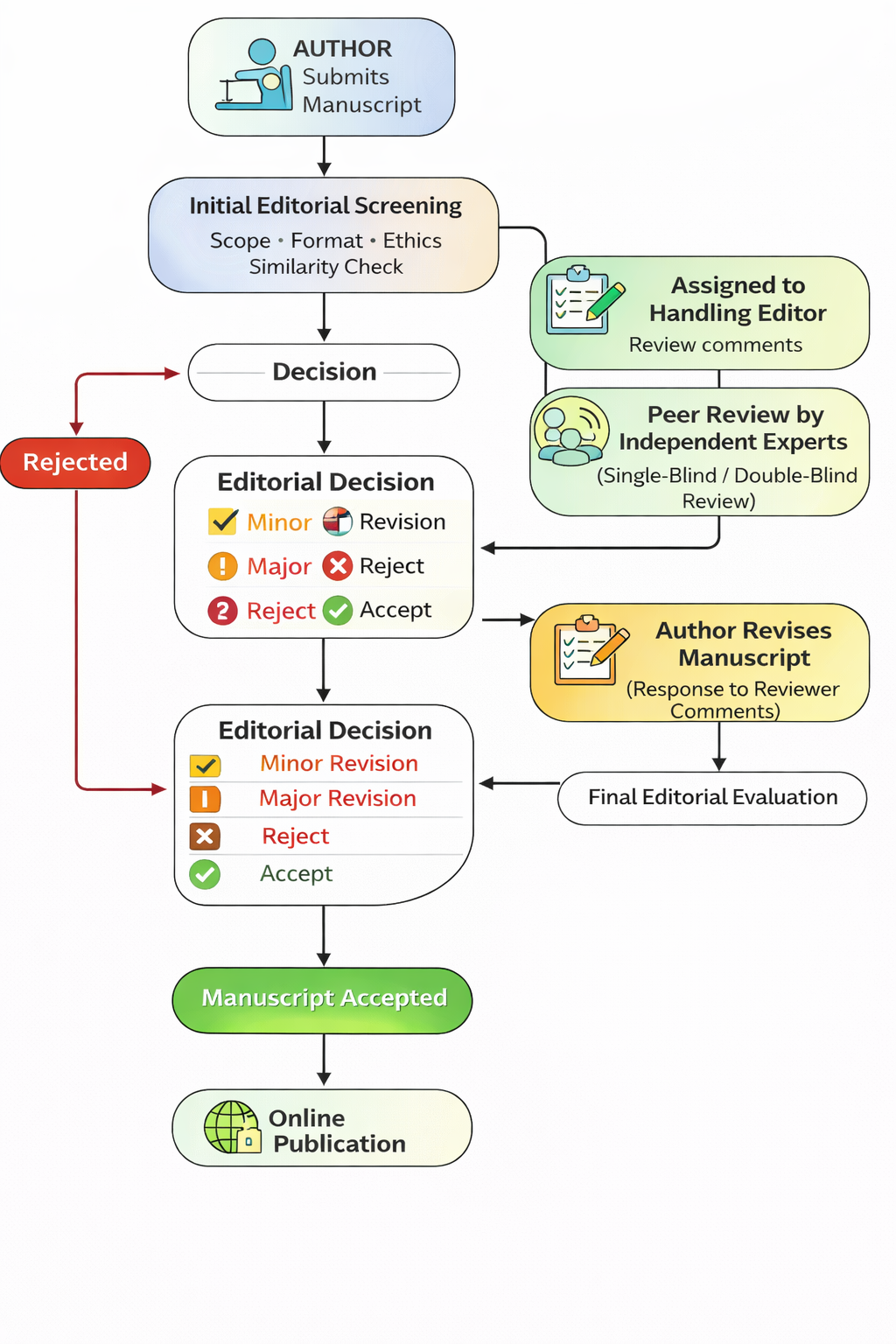
Editorial and Peer-Review Policy
Journal of Mental Health Research and Innovation adheres to a strict single-blind peer-review process to maintain the quality, integrity,
and scientific validity of all published work.
Key features include:
-
Each manuscript is reviewed by at least two independent experts in the field,
along with an academic editor.
-
Reviewers know who the authors are, but the authors remain unaware of the reviewer's
identities.
-
The evaluations emphasize scientific merit, originality, methodological rigor, ethical
compliance, and how well the work fits within the journal's scope.
-
Every submission goes through plagiarism checks and ethical compliance assessments
before the review process begins.
-
The final decision on publication is based on the reviewer's recommendations and the
editor's evaluation.
Publication Frequency & Format
This journal comes out Bi-Annual (Two issues per year). Accepted articles are
made available online in both HTML and PDF formats, ensuring that scholarly work is accessible
and disseminated promptly.
Open Access Policy
Journal of Mental Health Research and Innovationunder a fully open-access publishing model. All published articles are freely and immediately accessible online without subscription fees or access restrictions.
Authors retain the copyright to their published work. Articles are distributed under the Creative Commons Attribution 4.0 International License (CC BY 4.0), which permits readers and users to read, download, copy, share, redistribute, adapt, and build upon the published material in any medium or format, including for commercial purposes, provided that appropriate credit is given to the original author(s) and the source, a link to the license is provided, and any changes made are clearly indicated.
This open-access license supports the broad dissemination, responsible reuse, and global accessibility of scholarly research while ensuring appropriate recognition of the original authors.
Indexing & Archiving
Journal of Mental Health Research and Innovation is dedicated to upholding high standards with the goal of being included in reputable
scientific indexing and abstracting services. The journal also ensures long-term digital
preservation through recognized archives and repositories, guaranteeing permanent access and
discoverability.
Manuscript Submission
Authors are encouraged to submit their manuscripts through the journal's Online Submission
System (Submit Manuscript) or by emailing them directly to the
Editorial Office at
support@researchpubx.com.
Manuscripts must adhere to the journal's author guidelines regarding structure, formatting,
referencing style, ethical approvals, and necessary disclosures (such as conflicts of interest
and funding).
Publication Ethics & Integrity
Journal of Mental Health Research and Innovation follows internationally recognized standards for publication ethics and research integrity,
which include (but are not limited to):
- Make sure you have ethical approval.
- Ensure informed consent and guarantee confidentiality.
- Declare any conflicts of interest.
- Be transparent about data availability.
- Clarify authorship criteria and the roles of contributors.
- Conduct anti-plagiarism checks.
- Have a clear policy for retraction and correction.












 Abstract
 HTML
HTML
 PDF
PDF