
Environmental Resilience, Climate and Sustainability

ABSTRACT
Teacher education curricula in climate-vulnerable, post-conflict nations remain largely disconnected from the environmental realities that graduates will confront. This paper advances a theoretically grounded framework for integrating climate resilience into pre-service teacher education, using Sierra Leone as an illustrative case. Drawing on curriculum reconceptualist theory, the ILO's holistic greening model for technical and vocational education, and emerging competency frameworks for teachers' green skills, we argue that curriculum reform in teacher education constitutes a form of climate infrastructure, a durable institutional investment that multiplies adaptation capacity across generations. We propose a three-tier framework: (1) epistemic integration of indigenous ecological knowledge and climate science; (2) pedagogical transformation toward place-based, experiential, and community-engaged green pedagogies; and (3) systemic alignment with national climate commitments, particularly Nationally Determined Contributions (NDCs). The paper identifies persistent gaps between Sierra Leone's robust climate policy architecture; including its updated NDC, National Climate Change Policy, and National Adaptation Plan and the absence of environmental competencies in teacher preparation programs. We contend that without explicit curriculum intervention, teachers remain under-equipped as agents of climate response, and national climate ambitions lack the human capacity for implementation. This work contributes to the discourse on education for sustainable development in fragile, low-resource contexts by positioning curriculum reform not as peripheral to climate policy, but as its necessary foundation.
Keywords: Curriculum Development; Teacher Education; Climate Resilience; Environmental Education; Green Pedagogy; Sierra Leone; Fragile States; Education For Sustainable Development (ESD)
INTRODUCTION
The Curriculum-Climate Gap
Climate change is no longer an external threat to education systems; it is an internal destabilizer. In low- and middle-income countries (LMICs), rising temperatures, intensified flooding, coastal erosion, and agricultural disruption directly damage school infrastructure, disrupt attendance, and degrade learning outcomes The relationship is bidirectional: while climate change undermines education, education particularly when reoriented toward sustainability, builds the adaptive capacity of communities and nations. Yet the education sector's response remains disproportionately focused on infrastructure resilience (building climate-proof schools) and disaster risk reduction (DRR), while neglecting the curricular and pedagogical dimensions that determine whether education actually cultivates climate-literate citizens [13]. A systematic review of educational resilience to climate change in LMICs found that existing interventions concentrate on physical protection and continuity planning, with far less attention to what is taught, how it is taught, and who is prepared to teach it [21,24].
This gap is most acute in teacher education. Teachers are the ultimate implementers of any curriculum reform. If they lack environmental knowledge, green pedagogical skills, and the disposition to engage communities in sustainability, even the most ambitious national climate policies will falter at the classroom threshold. As the ILO observes in its guidance on greening technical and vocational education and training (TVET), teachers need two interrelated sets of skills: technical competence in delivering green curricula aligned with evolving labor market needs, and transversal capacities to infuse sustainability across all subjects and institutional practices [16,36]. Sierra Leone presents a compelling case for examining this gap. The country faces severe climate vulnerability coastal erosion, flooding, biodiversity loss, and agricultural disruption, and has developed comprehensive policy architecture to respond: an updated Nationally Determined Contribution (NDC) targeting a 25% emissions reduction by 2030, a National Climate Change Policy (2012), a National Adaptation Plan (2020), and the Environment Protection Agency Act (2022). However, these policies identify "weak institutional and technical capacity" and "low public awareness and participation" as persistent implementation barriers. Notably absent from the policy discourse is the role of teacher education in building that capacity and awareness [1,2].
This paper addresses that absence. We argue that curriculum reform in teacher education is not an academic luxury but a climate imperative, a form of climate infrastructure that embeds adaptive capacity into the social fabric through the profession that touches every child. We propose a framework for such reform, grounded in curriculum theory, informed by emerging global competency standards, and adapted to the realities of fragile, post-conflict education systems.
Theoretical Framing: Curriculum as Infrastructure
To position curriculum reform as climate infrastructure, we draw on three theoretical anchors [23].
Curriculum Reconceptualization and the "Hidden Curriculum" of Climate
William Pinar's reconceptualist tradition treats curriculum not as a fixed syllabus but as a complex conversation, a site where knowledge, identity, power, and place intersect. From this perspective, the absence of environmental content in teacher education is not neutral; it constitutes a hidden curriculum that silently reproduces ecological disconnection. When future teachers graduate without encountering climate science, indigenous ecological knowledge, or sustainability pedagogies, the curriculum teaches them implicitly but powerfully that these matters lie outside the legitimate boundaries of schooling. This is particularly consequential in post-conflict contexts like Sierra Leone, where curriculum reform has historically been driven by emergency response and basic education recovery rather than long-term sustainability The "opportunities for change" literature on education in conflict and recovery emphasizes that post-crisis moments offer unique windows for systemic transformation, but only if external support is sustained and capacity-building is prioritized from the outset [9,31,34]. Sierra Leone's post-conflict education reconstruction focused on access, peacebuilding, and basic literacy, necessary priorities, but ones that deferred environmental integration. The result is a teacher workforce prepared for yesterday's challenges, not tomorrow's [28].
The Holistic Greening Model
The ILO's guidance tool for greening TVET and skills development offers a systems-level framework that we adapt for teacher education. The model identifies seven interconnected elements: competency standards, curriculum, training delivery, assessment, campus greening, teacher/trainer development, and enterprise engagement. Critically, the ILO emphasizes that greening cannot be achieved through isolated interventions, adding one "environmental education" course, for example but requires transformation across all elements, underpinned by a "green culture" that permeates institutional policy and practice. For teacher education institutions, this implies that greening the curriculum is inseparable from greening the campus, the assessment regime, the professional development of faculty, and the partnerships with schools and communities where pre-service teachers [16]
Competency Frameworks for Green Pedagogy
Emerging frameworks for teachers' green skills, such as Ghana's ongoing development of a green skills competency framework under the Regional Teacher Initiative for Africa, identify four dimensions of teacher competence: knowledge (understanding environmental issues and sustainability principles), abilities (pedagogical strategies for green education), values and attitudes (environmental ethics and commitment), and community engagement (mobilizing local action). These frameworks move beyond content knowledge to encompass the dispositions and practices that enable teachers to become, in the Ghanaian formulation, "activists" for environmental protection who sensitize and motivate young generations [11]
The Sierra Leone Context: Policy Ambition Meets Curricular Silence
Climate Vulnerability and Policy Response
Sierra Leone's climate profile is alarming. The World Bank identifies it as one of the countries most at risk of losing development gains due to climate change, with threats including rising temperatures, extreme weather, sea level rise, flooding, coastal erosion, and biodiversity loss (World Bank, 2024). The agricultural sector, which employs the majority of the population, is particularly exposed. The policy response has been comparatively robust.
The updated NDC (2021) commits to unconditional mitigation targets and expanded adaptation actions across energy, transport, waste, agriculture, forestry, and coastal zones. Cross-cutting priorities include gender empowerment, disaster risk management, and capacity building. The National Climate Change Policy (2012) and National Adaptation Plan (2020) provide implementation roadmaps, while the Environment Protection Agency Act (2022) strengthens regulatory enforcement. However, a stakeholder mapping and analysis report identifies persistent challenges: limited data for evidence-based decision-making, weak institutional and technical capacity, inadequate financing, low public awareness, and competing development priorities [1,2,3]. The report explicitly recommends integrating "climate-related metrics and capacity-building programs into existing curricula" at universities to enhance NDC implementation tracking. Yet this recommendation remains unfulfilled.
Teacher Education in Sierra Leone: The Missing Environmental Strand
Sierra Leone's teacher education system; encompassing teacher training colleges and university-based programs has undergone significant post-conflict reconstruction. However, like many fragile-state systems, it has prioritized quantity (expanding enrollment) and basic pedagogical skills over thematic specialization. Environmental education, climate science, and sustainability pedagogies are not systematically embedded in pre-service curricula. This is not unique to Sierra Leone. A content analysis of over 1,000 courses at 35 universities in sub-Saharan Africa and Southeast Asia found that climate change and disaster risk reduction were taught in only 5% of planning courses in sub-Saharan Africa. Another analysis of climate change adaptation pedagogy in Namibian, South African, and Zimbabwean universities found that while climate change is recognized as a planning dilemma, it remains largely unintegrated into curricula [4]. The MECCE Project and NAAEE (2023) found that among 230 U.S. higher education institutions, climate change was more common in governance and facilities policies than in teaching and learning policies a pattern likely replicated, and probably amplified, in resource-constrained African contexts [22,25].
Recent evidence from the ARRICE project (African Regional Resilience Initiative on Climate Education, 2024–2028) confirms that climate change education remains underdeveloped across Africa, despite the continent's acute vulnerability (Office for Climate Education, 2024) [26]. The project, active in Kenya, Senegal, and Mauritius, works to integrate climate change education into national education systems through teacher training, pedagogical resources, and community participation. Similarly, UNICEF's Strategy for Climate-Resilient Education Systems in Eastern and Southern Africa (2025) documents that between 2022 and 2024, at least 14 countries in the region faced climate-related hazards that led to emergency school closures, further exacerbating learning losses [37]. The strategy identifies mainstreaming climate in learning opportunities including teacher training as a core priority.
In Sierra Leone specifically, the Ministry of Basic and Senior Secondary Education (MBSSE) endorsed the Climate Action Project 2024, recognizing that "education is key to building our resilience and our capacity to respond" (Take Action Global, 2024) [33]. The Ministry has also integrated climate change education and STEM-focused curricula into the compulsory Senior Secondary School Curriculum on Climate Change Awareness, Preparedness, and Resilience [5]. However, these initiatives remain at the policy level; pre-service teacher education has yet to systematically incorporate environmental competencies. The consequence is a generation of teachers who enter classrooms with limited capacity to teach climate-related content, model sustainable behaviors, or engage communities in adaptation planning. This represents a critical failure of climate policy implementation: ambitious national targets are undermined by human capacity deficits at the point of delivery.
|
Dimension |
National Climate Policy |
Teacher Education |
Gap Analysis |
|
Legal Framework |
Environment Protection Agency Act (2022); NDC (2021); National Climate Change Policy (2012); National Adaptation Plan (2020) |
No mandatory environmental education requirements in teacher certification |
Policy ambition lacks regulatory enforcement in teacher preparation |
|
NDC Targets |
25% emissions reduction by 2030; adaptation across 6 sectors |
No explicit linkage between NDC implementation and teacher education curricula |
Human capacity for NDC delivery not addressed through education |
|
Curriculum Content |
Climate change education integrated in senior secondary STEM curriculum (MBSSE, 2024) |
Pre-service programs lack climate science, green pedagogy, and sustainability content |
Vertical disconnect between school curriculum and teacher preparation |
|
Indigenous Knowledge |
NDC recognizes traditional ecological practices in adaptation |
No systematic integration of Mende, Temne, or other indigenous ecological knowledge in teacher education |
Epistemic exclusion perpetuates colonial knowledge hierarchies |
|
Assessment |
National examinations do not assess environmental competencies |
Teacher education assessment focuses on traditional pedagogical skills, not green attitudes or behaviors |
Assessment misalignment reinforces low priority of environmental education |
|
Professional Development |
Limited CPD opportunities for in-service teachers on climate education |
No structured green skills CPD pathway for teachers |
Continuous learning infrastructure absent |
|
Campus Operations |
Green growth strategy emphasizes renewable energy in public institutions (SEforALL, 2025) |
Teacher training colleges lack sustainable campus models |
Missed opportunity for experiential learning through modeling |
|
Community Engagement |
NDC stakeholder mapping identifies low public awareness as key barrier (Abanda et al., 2022) |
Teacher education does not prepare graduates for community-based climate action |
Teachers under-equipped as community intermediaries |
|
Financing |
Climate Finance Unit established at Ministry of Finance (2023) |
No dedicated funding stream for greenig teacher education |
Resource gap perpetuates implementation failure |
|
Monitoring |
GEWE Bill (2023) mandates gender-disaggregated climate data |
No tracking of environmental competencies among |
Accountability mechanism absent |
Source: Synthesized from Government of Sierra Leone policy documents (2021–2024), ATPS stakeholder analysis (2022; 2025), and SEforALL Energy Transition Report (2025)
Table 1: Climate Policy Architecture vs. Teacher Education Capacity in Sierra Leone
A Three-Tier Framework for Curriculum Integration
Drawing on the theoretical foundations and contextual analysis above, we propose a three-tier framework for embedding environmental resilience into teacher education curricula in fragile, climate-vulnerable contexts.
Tier 1: Epistemic Integration — What Teachers Know
The first tier addresses the knowledge base of future teachers. It involves:
Climate Science Literacy: Pre-service teachers need foundational understanding of climate systems, local climate projections, and the socio-ecological impacts of climate change in their specific contexts. This is not advanced atmospheric science but applied, place-based knowledge—understanding, for example, how shifting rainfall patterns affect local agriculture or why coastal erosion threatens specific communities [21].
Indigenous and Local Ecological Knowledge: A decolonized approach to environmental education, as advocated by Mbah and Ezegwu (2024), requires interrogating the epistemic exclusion of indigenous knowledge systems and seeking ways to integrate local wisdom [18,20].
Climate change education: In Sierra Leone, this means engaging Mende, Temne, and other indigenous ecological practices—sustainable farming techniques, water management systems, biodiversity stewardship—as legitimate curricular content, not as folklore to be displaced by "modern" science. This aligns with the decolonized education approach in the New Green Learning Agenda, which aims to dismantle colonial legacies that have marginalized Indigenous African epistemologies (Kwauk & Casey, 2021).
Policy and Governance Literacy: Teachers should understand national climate commitments (NDCs, adaptation plans), local governance structures for environmental management, and the mechanisms through which communities can access climate finance and adaptation support. This positions teachers as intermediaries between policy and practice a role increasingly recognized in climate-resilient education systems (UNICEF, 2025) [37,38].
Tier 2: Pedagogical Transformation — How Teachers Teach
Knowledge alone is insufficient [10]. The second tier focuses on pedagogical competencies:
Place-Based and Experiential Pedagogies: Green pedagogy requires moving beyond textbook transmission to experiential learning, school gardens, community watershed monitoring, coastal erosion mapping, local biodiversity inventories [15-19]. The ILO emphasizes pedagogies suited to greening, including "experiential, enquiring (discovery-based), embodied, game-based, and project-based" approaches (ILO, 2023). These methods are particularly appropriate for contexts where textbooks are scarce but ecological phenomena are abundant. Research across Eastern and Southern Africa confirms that participatory and culturally rooted pedagogies, drama, storytelling, debates, art, games, and music effectively build climate literacy and disaster risk reduction skills [17,20].
Cross-Curricular Infusion: Climate education should not be siloed in a single "environmental science" course. Drawing on the Greek model, where environmental concepts are "impregnated" across all subjects, pre-service teachers should learn to integrate environmental themes into mathematics (calculating carbon footprints), language arts (climate storytelling), social studies (climate justice), and arts (environmental expression). The Royal Meteorological Society (2025) has published a curriculum for climate literacy supporting this multi-curricular approach [24,30,35].
Community-Engaged Practice: Teachers must develop the competence to build partnerships with local environmental organizations, agricultural extension services, and community leaders. The ILO identifies "communicative competence" and the ability to establish working relationships across learning places as essential for vocational teachers (ILO, 2023). For generalist teachers in fragile contexts, this competence is equally critical for mobilizing community-based adaptation. Teachers across Africa are already acting as community climate leaders mobilizing tree-planting drives, clean-up campaigns, and water harvesting projects, often without formal training or recognition [12].
Tier 3: Systemic Alignment — Where Curriculum Meets Policy
The third tier ensures that curricular reform is not an isolated academic exercise but is embedded in national systems:
Alignment with NDC Implementation: Teacher: education curricula should explicitly reference national climate commitments and prepare teachers to contribute to their achievement. Sierra Leone's NDC identifies capacity building as a cross-cutting priority; teacher education should be designated as a formal capacity-building mechanism within NDC implementation plans (UNFCCC, 2021) [38].
Green Campus Operations: Teacher training institutions should model sustainability through campus practices—renewable energy, waste management, water conservation, sustainable food systems. The campus becomes a living curriculum where pre-service teachers experience green practices before being asked to teach them. The ILO notes that "a strong basis of green values and ethics, combined with knowledge, skills and competencies, is an important foundation for social transformations" [5,16].
Continuous Professional Development (CPD) Pathways: Pre-service integration must be complemented by in-service support. Ghana's green skills framework includes operationalization plans, monitoring systems, and advocacy for sustained funding (Expertise France, 2025). Sierra Leone should develop similar CPD pathways, including short courses on green fundamentals, training-of-trainer workshops, and digital badging for green competencies [11].
Assessment Reform: Assessment regimes must evolve to evaluate not only content knowledge but green attitudes, behaviors, and community engagement. The ILO emphasizes the need to assess "the green attitudes and behaviours acquired by learners, as well as technical skills for greener jobs" (ILO, 2023). Teacher education programs must model this approach in their own assessment of pre-service teachers [7,16,29].
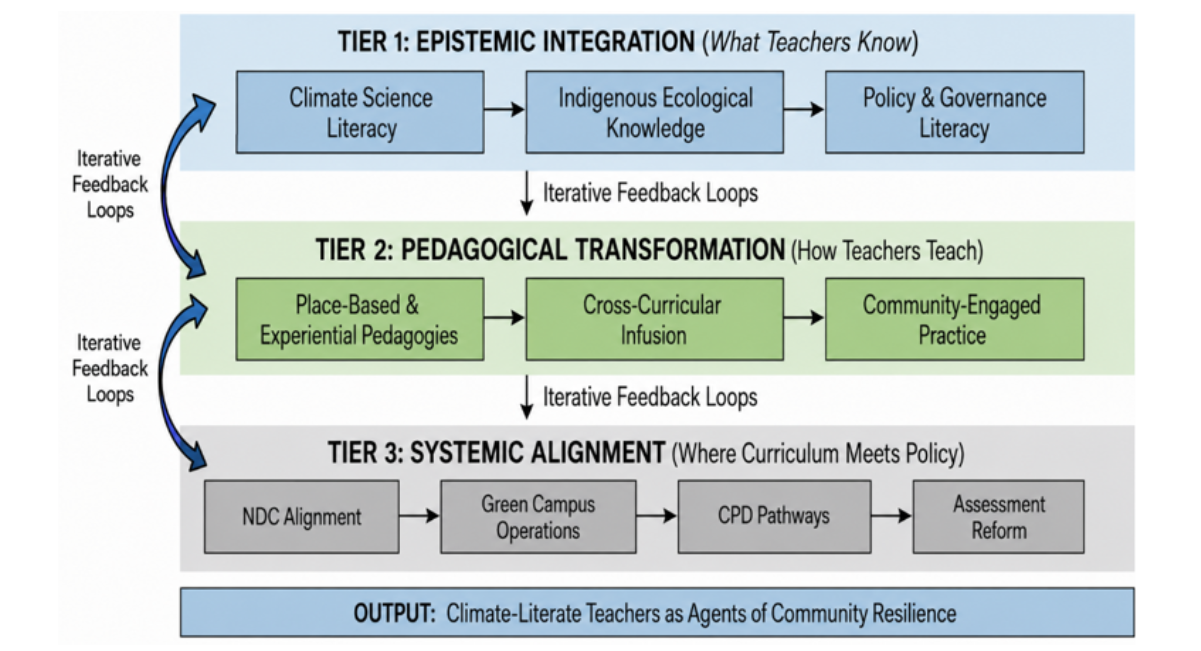
Figure 1: The Three-Tier Framework — Operational Pathway
Implementation Considerations for Fragile Contexts
Fragile and post-conflict contexts present distinct challenges for curriculum reform. Drawing on the education-in-emergencies literature, we identify three critical implementation considerations:
Long-Term Commitment: Curriculum transformation in conflict-affected states requires sustained investment over 5–10 years, not short-term project cycles. Sierra Leone's teacher education greening must be embedded in national education sector plans with multi-year budget lines. The ARRICE project model (2024–2028) demonstrates that four-year programmatic horizons are minimum requirements for systemic integration [26].
Capacity-Building at Multiple Levels: Weak institutional capacity is a recurrent constraint. Reform must simultaneously build the capacity of curriculum developers, teacher educators, school leaders, and classroom teachers. Zimbabwe's Green enterPRIZE program exemplifies this multi-level approach, involving inter-ministerial task forces, TVET institution networks, industry representatives, and workers' organizations in collaborative curriculum development [14].
Contextual Adaptation: Global frameworks must be adapted to local realities. While the ILO's greening tool and Ghana's competency framework provide valuable templates, Sierra Leone's integration must account for its specific ecological contexts (coastal zones, upland forests), linguistic diversity, and the legacies of conflict that shape community trust and institutional legitimacy [27]. Teachers in resource-constrained settings face severe shortages; limited digital devices, inadequate internet, insufficient textbooks, and poor infrastructure requiring pedagogical approaches that do not depend on technology [8,18].
|
Country/Program |
Focus Area |
Key Features |
Relevance to Sierra Leone |
|
Ghana: Green Skills Competency Framework (2025) [11] |
Pre-service teacher competencies |
Four-dimension framework: knowledge, abilities, values/attitudes, community engagement; includes operationalization plan and monitoring system (Expertise France, 2025) |
Direct template for competency-based curriculum reform; adaptable four-dimension structure |
|
Zimbabwe: Green enterPRIZE Program |
TVET institution greening |
Multi-level capacity building; inter-ministerial coordination; industry partnership (Hartmann, 2023) |
Model for multi- stakeholder governance in fragile context |
|
Kenya/Senegal/Mauritius: ARRICE Project (2024–2028) |
Climate change education integration |
Pedagogical resources; teacher training; community participation; policy integration (Office for Climate Education, 2024) |
Regional peer learning; whole-school approach; scalable model |
|
South Africa: Environmental Education Policy |
National curriculum integration |
Mandatory environmental education across all phases; assessment integration; teacher CPD (Mbah & Ezegwu, 2024) |
Lessons on assessment alignment and CPD infrastructure |
|
Namibia: Climate Change Adaptation Pedagogy [4] |
Higher education curriculum |
Integration of climate adaptation into university planning curricula; research-practice links (Apollo & Mbah, 2021) |
Cautionary example of partial integration; need for systemic approach |
|
Greece: Cross-Curricular Environmental Infusion [24] |
School-level pedagogy |
Environmental concepts impregnated across all subjects; teacher preparation for interdisciplinary delivery (Moshou & Drinia, 2023) |
Model for cross-curricular infusion in teacher education |
|
System-level climate resilience |
Three priorities: resilient education services; climate in learning; youth-led green skills (UNICEF, 2025) |
Framework for aligning teacher education with regional strategy |
|
|
Sierra Leone: MBSSSE Climate Action (2024) [33] |
Secondary school curriculum |
Climate change awareness in senior secondary STEM; partnership with Take Action Global (Take Action Global, 2024) |
Foundation to build upon; need vertical integration into teacher education |
Table 2: Comparative Analysis of Green Teacher Education Initiatives in African Contexts
CONCLUSION
Curriculum as Moral and National Imperative
The argument of this paper is straightforward but, we believe, urgent: teacher education curriculum reform is a necessary condition for climate resilience in vulnerable nations. Without teachers who understand climate science, practice green pedagogy, and engage communities in adaptation, national climate policies remain aspirational documents. With such teachers, education becomes a multiplier of adaptive capacity reaching every child, every classroom, and every community.
Sierra Leone's climate policy architecture is comparatively advanced. Its NDC, National Climate Change Policy, and National Adaptation Plan provide a coherent framework for action. What is missing is the human infrastructure to implement that framework. Teacher education is where that infrastructure is built or neglected.
We have proposed a three-tier framework epistemic integration, pedagogical transformation, and systemic alignment as a roadmap for this reform. The framework is not Sierra Leone-specific; it is designed for adaptation across fragile, climate-vulnerable contexts where curriculum development intersects with environmental crisis. The stakes extend beyond policy compliance. In a nation where children already face disrupted schooling from floods and landslides, where coastal communities watch their land disappear, and where agricultural livelihoods grow increasingly precarious, the question is not whether teacher education can afford to integrate climate resilience. It is whether Sierra Leone can afford for it not to.
REFERENCES
- Stakeholder Mapping And Analysis For Climate Change Policy Implementation In Sierra Leone
- Adusu D, Anaafo D, Abugre S, Addaney M. Experiential Knowledge of urbanites on climatic changes in the Sunyani municipality, Ghana. Journal of Urban Affairs. 2023;45(3):488-504. [ Crossref] [ Google Scholar]
- Nyambane An. Stakeholder Mapping And Analysis For Climate Change Policy Implementation In Botswana. Report. 2024. [ Google Scholar]
- Apollo A, Mbah MF. Challenges and opportunities for climate change education (CCE) in East Africa: A critical review. Climate. 2021;9(6):93. [ Crossref] [ Google Scholar]
- (2025 ). Sierra Leone Energy Transition and Green Growth Plan. Sustainable Energy for All.
- Bangay C. Education, anthropogenic environmental change, and sustainable development: A rudimentary framework and reflections on proposed causal pathways for positive change in low‐and lower‐middle income countries. Development Policy Review. 2022;40(6):e12615. [ Crossref] [ Google Scholar]
- Blanchet-Cohen N, Brunson L. Creating settings for youth empowerment and leadership: An ecological perspective. Child & Youth Services. 2014 ;35(3):216-36..[ Crossref] [ Google Scholar]
- Brookings Institution. (2026). Chalk, courage, and climate change: How educators in eastern and southern Africa are transforming challenges into action. Brookings. [ Crossref]
- Davies, L. (2004). Education and Conflict: Complexity and Chaos. Routledge. [ Crossref] [ Google Scholar]
- Eilam E. Considering the role of behaviors in sustainability and climate change education. Frontiers in Psychology. 2025 ;15:1394326. [ Google Scholar]
- Expertise France. (2025). Development of teachers' green skills competency framework: Terms of reference. Government of Ghana/Expertise France .
- Fields, A., et al. (2023). Youth climate action and education outcomes. Journal of Environmental Education. [ Crossref]
- Gong Q, Duan Y, Guo F. Disaster risk reduction education in school geography curriculum: Review and outlook from a perspective of China. 2021 13(7):3963., 30(4), 354–371. [ Crossref] [ Google Scholar]
- Hartmann, D. (2023 Diep PC, Hartmann M. Green Skills in Vocational Teacher Education–a model of pedagogical competence for a world of sustainable development. TVET@ Asia. 2016;6:1-9.2. [Google Scholar]
- Davies AR, Hügel S, Norman A, Ryan G. Climate Smart: geography, place and climate change adaptation education. Geography. 2024;109(1):27-35. [Google Scholar]
- (2023). Greening TVET and Skills Development: A Step-by-Step Guidance Tool. International Labour Organization. [ Crossref]
- Kassim, A. (2024). Place-based education in African contexts. Journal of Education for Sustainable Development . [Crossref]]
- Khupe, , (2024). David JO. Decolonizing climate change response: African indigenous knowledge and sustainable development. Frontiers in Sociology. 2024;9:1456871. [ Crossref] [ Google Scholar]
- Kolb DA . Experiential learning: Experience as the source of learning and development. FT press; 2014. [ Google Scholar]
- Kwauk, C., & Casey, B. (2021). A new green learning agenda: Approaches to quality education for climate action. Brookings Institution.
- Lautensach A, Litz D, Younghusband C, Banack H, Thielmann G, Crandall J . The What, Why, and How of Climate Change Education: Strengthening Teacher Education for Resilience. Sustainability. 2025 Oct ;17(19):8816. [ Crossref] [ Google Scholar]
- MECCE Project & (2023). Monitoring and Evaluating Climate Communication and Education .
- Miller JP. Education and the soul: Toward a spiritual curriculum. State University of New York Press; 2000.[ Crossref] [ Google Scholar]
- Moshou H, Drinia H . Climate change education and preparedness of future teachers—A review: The case of Greece. Sustainability. 2023 Jan ;15(2):1177.15(18), 13847. [ Crossref] [ Google Scholar]
- Obi JN, Ojo E. Mainstreaming climate change in school curricula: critical review of pedagogy, policy and Global South perspectives. Cogent Education. 2026 Dec ;13(1):2613489. [ Crossref] [ Google Scholar]
- Office for Climate (2024). ARRICE: African Regional Resilience Initiative on Climate Education.
- Schinkel A . Climate change and democratic education. InThe Cambridge Handbook of Democratic Education 2023 (pp. 574-593). Cambridge University Press. . [Crossref] [ Google Scholar]
- Pinar W. The character of curriculum studies: Bildung, currere, and the recurring question of the subject. Springer; 2011. [ Crossref] [ Google Scholar]
- Kitson A, Greer K, Walshe N, Sheldrake R, Dillon J. CURRICULUM AND ASSESSMENT REVIEW: Call for evidence| CCCSE Response. [Crossref] [Google Scholar]
- Septiani E, Setyowati DL, Juhadi J, Husain F, Putri RS. Literature Study: Integration of Climate Change Education in School Curriculum of Various Countries. InProceedings of International Conference on Science, Education, and Technology 2024 (Vol. 10, pp. 405-411).[ Crossref] [ Google Scholar]
- Sinclair M. Planning education in and after emergencies. Paris: UNESCO, International Institute for Educational Planning; 2002. [ Crossref] [ Google Scholar]
- Smith GA, Sobel D. Place-and community-based education in schools. Routledge; 2014 Apr . [ Crossref] [ Google Scholar]
- Take Action Global. (2024). Press release: Sierra Leone Ministry of Basic and Senior Secondary Education endorses Climate Action Project 2024.
- Tawil S, Harley Education, conflict and social cohesion. (No Title). 2004. [ Crossref] [ Google Scholar]
- Nunes Fernandes Teixeira JE, Crawford E. Climate Change Education and Curriculum Revision. [ Crossref] [ Google Scholar]
- UNESCO-UNEVOC. (2017). Greening TVET: A Practical Guide for Institutions .UNESCO-UNEVOC.
- (2025). Strategy for Climate-Resilient Education Systems in Eastern and Southern Africa. UNICEF ESARO.
- (2021). Sierra Leone Updated Nationally Determined Contribution. United Nations Framework Convention on Climate Change.