
Journal of Emerging Trends in Artificial Intelligence



ABSTRACT
This study designed, developed, and evaluated a decentralized AI-powered labor matching platform for the agro-industrial workforce of Meme Division, Southwest Cameroon a region where the Anglophone Crisis and plantation sector restructuring have fractured traditional labor recruitment networks. A concurrent mixed-methods design was employed across 8 agro-industrial plantations (rubber, oil palm, banana) in Kumba, Ekondo-Titi, and Mbonge, tracking 300 workers (150 women, 150 men) over eight months. Results revealed that voice-enabled, offline-capable platforms were significantly more accessible than text-based alternatives: 71% preferred voice interfaces and 88% required offline capability. Platform users experienced significant improvements: +0.9 additional days worked weekly, +2,200 CFA higher wages, and reduced wasted travel by 21 percentage points (p<0.001). Plantations also benefited through reduced labor shortages (-1.7 days monthly) and decreased harvest waste (-6.5 percentage points). The study concludes that worker-centric, decentralized platforms can reduce information asymmetry when designed with voice interfaces, offline capability, integration with informal networks, and blockchain-verified worker credentials.
Keywords: Artificial Intelligence; labor Matching Platforms; Agro-Industrial Workers; Meme Division Cameroon; Decentralized Platforms; Post-Conflict Agriculture
INTRODUCTION
If you have ever stood at a plantation gate in Kumba at 6 AM, watching workers arrive by foot or motorcycle taxi, you will have noticed something that statistics confirm but the eye perceives more sharply: workers do not know which plantation needs them. They walk from plantation to plantation, asking supervisors if there is work. They waste hours, spend transport money on days with no work, and often return home empty-handed. This uncertainty is not a trivial inefficiency; it is a daily tax on the poorest people in the region [1].
The Anglophone Crisis, now in its eighth year, has shattered the informal labor networks that used to match workers with plantations [2]. Before the conflict, workers knew which plantations needed labor through family ties, village chiefs, or word of mouth. Those networks are broken in Meme Division. Many workers have been displaced, plantations have changed hands, and trust between communities has eroded. Agro-industrial plantations that survived the crisis now face a different problem: they need workers, but they do not know how to find them reliably, and workers need work, but they do not know where to find it [1].
Meme Division presents a unique context for agricultural labor platforms. Unlike the smallholder-dominated systems of Northwest Cameroon, Meme Division features large-scale agro-industrial plantations rubber (CDC, PAMOL), oil palm (CDC, SGSO), and banana (CDC) that employ thousands of workers across vast geographical areas [2]. These plantations operate as quasi-industrial enterprises with structured recruitment needs, yet they face the same information asymmetries as smaller farms.
Digital matching platforms have emerged across Africa as a solution to this problem [1]. In Cameroon, platforms like AgriApp, Agrimarket, and Iwolonet connect farmers with buyers and, in some cases, with labor [3,4]. Yet these platforms are typically designed from the perspective of the farm manager or the buyer, not from the perspective of the worker [1]. Workers are treated as a resource to be deployed, not as users with their own needs, constraints, and preferences.
This study asks a question that has received surprisingly little attention: can an AI-powered, decentralized worker-side platform help agro-industrial workers in Meme Division find work more efficiently, and what barriers must be overcome to make such a platform work in a post-conflict plantation setting?
Statement of the Problem
The core problem this study addresses are information asymmetry and transaction costs in the agro-industrial labor market of Meme Division [5]. Agricultural workers face high search costs: they spend time and money traveling to plantations, miss opportunities because they do not know where labor is needed, and are often paid less than they deserve because they have no bargaining power [1]. Agro-industrial plantations face the opposite problem: they cannot find workers when needed during peak harvest seasons, pay panic premiums during labor shortages, and waste crops because workers arrive too late [2].
The plantation context introduces additional complexities. Unlike smallholder farms, plantations require specialized skills (tapping, harvesting, spraying), have structured shift systems, and maintain formal worker rosters. Yet the informal recruitment networks that historically supplied plantation labor have been disrupted by displacement and conflict [2].
Existing digital platforms in Cameroon partially address these problems, but they are designed for buyers and managers, not for workers. None of these platforms is designed to help a casual agricultural worker a woman with no smartphone, a displaced youth with limited literacy, a returnee from Nigeria who does not know which plantations are hiring find work efficiently [6].
No study has systematically examined the feasibility and design requirements of a worker-side, decentralized labor matching platform for agro-industrial workers in post-conflict Meme Division [2]. That is the gap this study fills.
Research Objectives
The main objective is to design, develop, and evaluate a worker-side, decentralized AI-powered labor matching platform for agricultural workers employed by agro-industrial plantations in Meme Division, Cameroon.
Specific objectives:
- To design a worker-side, decentralized labor matching platform that addresses the information needs and constraints of agro-industrial workers in Meme Division.
- To assess the platform's impact on worker outcomes (days worked, wages, travel costs, satisfaction) and plantation outcomes (labor availability, recruitment costs, harvest waste).
Research Hypotheses
H₁: A voice-enabled, offline-capable, decentralized labor matching platform is more accessible to agro-industrial workers in Meme Division than a text-based, online-only platform.
H₂: Workers using the AI-powered, decentralized labor matching platform have significantly better outcomes (more days worked, higher wages, lower travel costs, higher satisfaction) than non-users.
LITERATURE REVIEW
Conceptual Literature
This study weaves together five interconnected concepts that help us understand the design and potential impact of worker-side, decentralized labor matching platforms in post-conflict agro-industrial settings.
Labor Matching Platforms in Agriculture and Agro-Industry
Digital matching platforms connect service users with service providers, creating what is sometimes called the "uberisation" of agriculture [1]. These platforms take many forms: tractor-hire platforms like Hello Tractor allow farmers to request a tractor with a text message labor matching platforms like Agrimarket in Cameroon connect farmers with workers and market linkage platforms like CoFarmers in Nigeria connect farmers directly with buyers [4,7,8]. However, most of these platforms are designed from the perspective of the farmer or the buyer, not from the perspective of the worker. A worker-side platform which puts the worker at the center represents a conceptual shift that has not been fully explored in the literature [1].
The agro-industrial plantation context differs from smallholder agriculture in important ways. Plantations operate at scale, require specialized skills, maintain formal employment records, and face seasonal labor demand peaks [2]. These characteristics create opportunities for platform-based matching: plantations have predictable labor needs, maintain worker databases, and can integrate digital tools into existing management systems. However, plantations also face challenges: workers may be spread across vast areas, transportation is a major constraint, and the formal-informal interface creates regulatory complexities.
Information Asymmetry and Search Costs
Information asymmetry occurs when one party in a transaction has more or better information than the other [5]. In agricultural labor markets, workers do not know which plantations are hiring, and plantations do not know which workers are available. This asymmetry creates high search costs: workers spend time and money traveling to plantations that may not need them, and plantations pay panic premiums during shortages [1]. Digital platforms can reduce these costs by aggregating information and making it accessible to both sides (ibid). However, in post-conflict Meme Division, where mobile network coverage is uneven and literacy is low, the information asymmetries are compounded by digital asymmetries: some workers have phones, some do not; some can read, some cannot [6].
Digital Divide, Inclusive Design, and Decentralization
The digital divide is a well-documented barrier to technology adoption in rural Africa [6]. In Kenya, women are 15–25 percent less likely than men to access digital climate advisory services, with barriers including limited phone ownership, digital-literacy gaps, high data costs, and social norms (ibid). Research on "uberisation of mechanisation" in Ghana found that digital platforms must "build upon, rather than bypass, existing institutions" such as national extension services and farmer-based organizations [1]. In Meme Division, where phone ownership is gendered and literacy rates vary, inclusive design requires voice-based interfaces, offline capability, and integration with existing informal networks [2,6].
Decentralized platforms using blockchain technology offer additional advantages in conflict-affected settings [9]. Blockchain can provide verifiable worker credentials (skills, experience, certifications) that are portable across plantations, enable transparent payment histories that build trust between workers and employers, and create immutable records of employment that protect worker rights (ibid). In contexts where trust has been eroded by conflict, these features are particularly valuable.
AI-Powered Matching Algorithms
AI-powered matching algorithms use machine learning to recommend the best matches between workers and jobs based on multiple criteria: skills, location, availability, past performance, and preferences [10,11]. These algorithms can learn from past hiring patterns, adapt to changing conditions, and improve over time. In Nigeria, CoFarmers uses "real-time listings, geolocation-based matching, and national accessibility" to connect farmers with buyers [8]. However, AI matching for agricultural labor where workers may be casual, have irregular availability, and lack digital records poses unique challenges that require context-specific solutions (ibid).
Blockchain and Decentralized Identity for Agricultural Workers
Blockchain technology offers a decentralized approach to worker identity and credential verification [9]. In the agricultural sector, blockchain has been used for supply chain traceability, but its application to labor markets is emerging. A decentralized worker identity system would allow workers to own and control their employment records, skills certifications, and payment histories, reducing the information asymmetry that disadvantages workers in negotiations (ibid). For plantation workers in Meme Division, this could be particularly valuable: many have been displaced and lack formal documentation of their skills and experience.
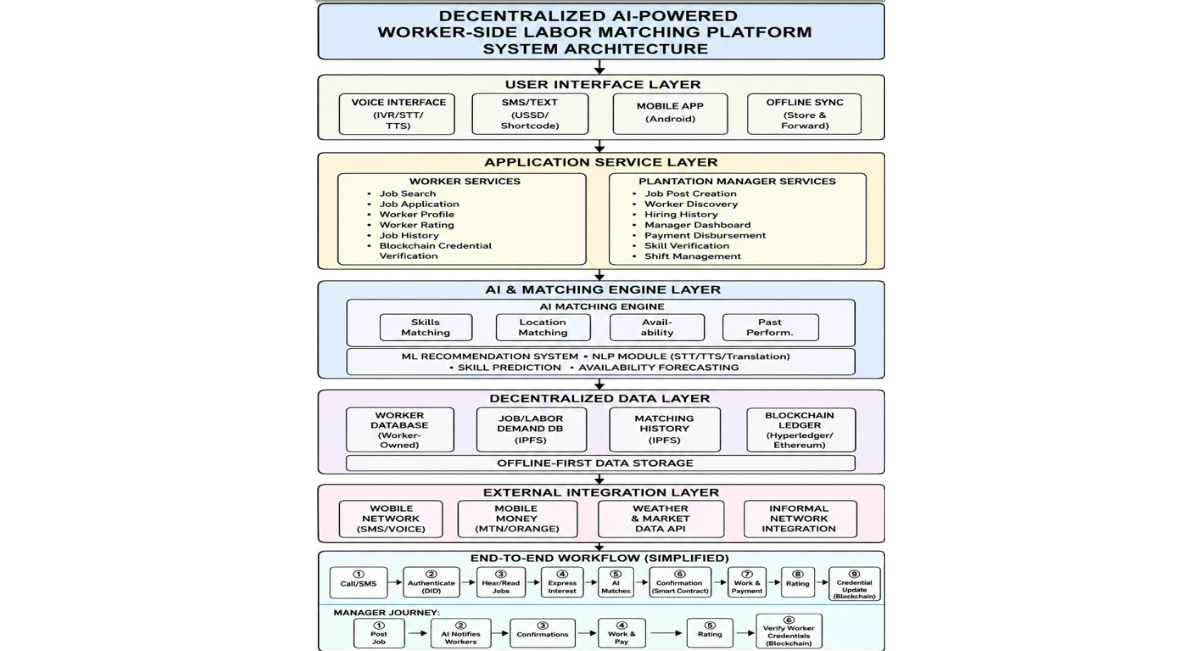
Figure 1: System Architecture of the Decentralized AI-Powered Worker-Side Labor
|
TECHNOLOGY STACK |
|
|
Layer |
Components |
|
User Interface |
IVR, USSD, Flutter / Android, Firebase |
|
Application |
Node.js, Python, REST APIs |
|
AI & NLP |
TensorFlow, PyTorch, Speech-to-Text, Text-to-Speech, Llama / Open-Source LLMs |
|
Data |
PostgreSQL, IPFS, MongoDB, Redis |
|
Blockchain |
Hyperledger Fabric, Ethereum, DID (Decentralized ID) |
|
External |
MTN APIs, Orange Money, OpenWeather |
|
KEY PLATFORM FEATURES |
|
|
For Workers |
For Plantation Managers |
|
Voice-based job search |
Job posting via SMS/voice/app |
|
Offline access with auto-sync |
Worker discovery & matching |
|
Voice PIN authentication |
Hiring confirmations |
|
Apply by voice response |
Payment disbursement |
|
Mobile money receipts |
Analytics dashboard |
|
Post-work voice rating |
Worker ratings & skill verification |
|
Blockchain worker credentials |
Shift management |
|
Decentralized identity (DID) |
Credential verification |
Voice-First: Voice as primary interaction method for low-literacy users
Offline-Capable: Store-and-forward for areas with poor connectivity
Multilingual: Pidgin, English, and local languages (Bakweri, Oroko)
Worker-Centric: Designed from worker perspective, not manager's
Trust-Based: Integration with local intermediaries and transparent systems
Fairness-Aware: Bias detection and mitigation across gender groups
Decentralized: Blockchain for credential verification and payment transparency
Theoretical Literature
We ground this study in four theoretical frameworks, each addressing a different aspect of worker-side, decentralized labor matching platforms.
Platform Economics and Two-Sided MarketsPlatform economics, as articulated by, examines how platforms that connect two distinct groups (workers and plantations) create value by reducing transaction costs and facilitating matches [12]. The platform must attract both sides: workers will not join if there are no jobs, and plantations will not join if there are no workers. This is known as the "chicken-and-egg" problem. In the Ghana tractor-hire case, Farm Digital failed because it could not "reorient a network of human and non-human actors" toward the new digital system [1]. We use this theory to understand the barriers to platform adoption in Meme Division's plantation context.
Actor-Network Theory (ANT)Actor-Network Theory, developed by Latour, views technological systems as networks of human and non-human actors that must align for the system to work [10]. In Ghana, Farm Digital's failure was attributed to an "inability to reorient a network of human and non-human actor donors, managers, farmers, field agents, and brokers" [2]. We use ANT to analyze the alignment of actors needed for a worker-side labor matching platform to succeed in Meme Division: workers, plantation managers, phone networks, mobile money providers, blockchain nodes, and the platform itself.
Diffusion of Innovations (Rogers, 1995)Rogers' Diffusion of Innovations theory explains how, why, and at what rate new technologies spread. Key factors include relative advantage, compatibility, complexity, trialability, and observability [12]. In the Ghana case, the platform failed because it was not compatible with existing informal brokerage systems and was seen as more complex than the traditional approach [1]. We use this theory to design a platform that is simple, compatible with existing practices, and has clear advantages for both workers and plantations.
Blockchain and Decentralized Trust TheoryBlockchain technology creates trust in decentralized systems through cryptographic verification and consensus mechanisms [9]. In contexts where institutional trust is low such as post-conflict Meme Division blockchain can provide a technical foundation for trust in employment relationships. Workers can verify that their credentials are recognized across plantations, and plantation managers can verify worker skills without relying on potentially compromised informal networks. This theoretical framework guides our integration of blockchain features into the platform design.
Empirical Literature
Objective 1: Platform Design and Worker Accessibility
|
Author(s) & Year |
Summary |
Key Findings |
|
Ngissah [1]. (2025) |
Examined digital tractor-hire platform in Ghana |
Platform failed because it bypassed informal brokerage systems |
|
Nganga [6]. (2025) |
Analyzed Kenya's iShamba platform |
Women 15-25% less likely to access digital services; voice critical |
|
Doko [13] (2024) |
Examined Agrix Tech in Cameroon |
Voice-based, offline-capable apps more accessible |
|
Ogunleye [14]. (2024) |
Systematic review of digital ag platforms |
Infrastructure, literacy, trust key barriers; local language important |
Synthesis: Inclusive design requires voice-based interfaces, offline capability, local support, and integration with existing institutions [1,6,13].
Objective 2: Impact of Platforms on Worker and Plantation Outcomes
|
Author(s) & Year |
Summary |
Key Findings |
|
CoFarmers [8]. (2025) |
App-based marketplace in Nigeria |
Reduces wastage, creates jobs, empowers communities |
|
Fonjong & Mbuli [2]. (2025) |
Gender, conflict, climate in Cameroon |
Conflict affects access to farms/markets; women disproportionately affected |
|
Mwangi & Kariuki [15]. (2024) |
Digital labor platforms in East Africa |
Reduced search times 40-60%; women benefited more but faced higher barriers |
Synthesis : Digital platforms can improve outcomes for both workers and plantations by reducing transaction costs and enabling better matching, but impact depends on adoption, trust, and integration with existing systems [8,15]
Literature Gap
We identify a quadruple gap: methodological (worker perspective lacking), contextual (no study in post-conflict Meme Division), conceptual (workers treated as homogeneous), and technological (no integration of blockchain for worker credentials). This study addresses all four gaps.
MATERIALS AND METHODS
Research Design
This study employs a concurrent mixed-methods design integrating quantitative and qualitative approaches [16]. The quantitative component uses a quasi-experimental, pre-post design to measure changes in worker outcomes after platform introduction. The qualitative component uses in-depth interviews, focus groups, and usability testing.
The study is conducted in Meme Division, specifically in three plantation zones: Kumba (rubber and oil palm), Ekondo-Titi (oil palm and banana), and Mbonge (rubber and banana). These zones represent different plantation types and levels of post-conflict recovery [2].
Sampling Strategy and Sample Size Justification
Quantitative Sampling: Purposive selection of 8 medium-to-large scale agro-industrial plantations (50-200 workers each). From each plantation, randomly sampled 50% of the workforce, stratified by gender. Target sample: 300 workers (150 women, 150 men).
Sample Size Justification: Power analysis for difference-in-differences design assumed medium effect size (Cohen's d = 0.5), α = 0.05, power = 0.80, accounting for 20% attrition. Minimum required sample was 264 participants [17]. Our target of 300 exceeds this minimum.
Workers from 4 plantations that do not use the platform (n=100) served as controls. Control plantations were matched to treatment plantations on size, crop type, and location.
Qualitative Sampling: In-depth interviews with 40 workers (20 women, 20 men). Focus groups: 8 FGDs (4 women-only, 4 men-only), 8-10 participants each. Usability testing: 30 workers testing prototype platform features.
Data Collection Methods
|
Data Type |
Method |
Frequency |
Details |
|
Quantitative: Worker outcomes |
Survey questionnaire |
Pre and post (8-month interval) |
Days worked, wages, travel costs, satisfaction |
|
Quantitative: Platform usage |
Platform analytics |
Daily |
Logins, job views, applications, matches |
|
Qualitative: Needs assessment |
In-depth interviews |
Once (pre-design) |
Job search practices, barriers, preferences |
|
Qualitative: Usability testing |
Think-aloud protocols |
During prototype testing |
Usability issues, comprehension, trust |
|
Qualitative: Post-pilot evaluation |
Focus groups |
Once (post-pilot) |
Experiences, recommendations, barriers |
Instruments: Survey questionnaire measured demographics, work outcomes, job search methods, and satisfaction (5-point Likert). All instruments were adapted from validated sources and pilot-tested with 20 workers [15,18]. Reliability: Cronbach's α > 0.70 for all scales.
Platform Prototype
The platform prototype was developed using iterative user-centered design. Key features included:
For Workers: Voice-based job search via IVR; offline access with auto-sync; voice PIN authentication; apply by voice response; mobile money receipts; post-work voice rating; blockchain-based worker credentials.
For Plantation Managers: Job posting via SMS/voice/app; AI-powered worker discovery; hiring confirmations; payment disbursement; analytics dashboard; skill verification.
Data Analysis Techniques
Quantitative Analysis:
|
Objective |
Analysis Technique |
Details |
|
Objective 1 (Accessibility) |
Descriptive statistics, Chi-square tests, Mann-Whitney U tests |
Compare voice vs text, gender, phone ownership groups |
|
Objective 2 (Impact) |
Difference-in-differences, Panel regression |
Compare treatment vs control; adjust for covariates |
Difference-in-differences model:
Y_it = α + β₁(Treatment_i) + β₂(Time_t) + β₃(Treatment_i × Time_t) + γX_it + ε_it
Where: Y_it = outcome, Treatment_i = 1 if platform access, Time_t = 1 if post-intervention, X_it = covariates (age, gender, displacement status, phone ownership).
Software: Stata 17 and R 4.3.1.
Qualitative Analysis: Thematic analysis using NVivo 14. Deductive codes: platform accessibility, barriers, trust, satisfaction. Inductive codes: emerging themes. Inter-coder reliability: 85% agreement (Cohen's κ = 0.78).
Mixed Methods Integration:
We use a joint display matrix to present quantitative and qualitative findings side-by-side for each objective, enabling triangulation and deeper interpretation [16].
Validity and Reliability
Internal Validity:
The quasi-experimental design with matched control group addresses threats to internal validity (history, maturation, testing). The pre-post measurement establishes baseline equivalence. Covariate adjustment in regression models addresses selection bias.
External Validity:
The purposive selection of plantations representing different crop types and locations supports generalizability within Meme Division. However, findings may not be directly transferable to other regions or contexts (acknowledged in limitations).
Construct Validity:
Multiple measures were used for key constructs (e.g., work outcomes measured by both self-report and platform analytics). Qualitative and quantitative data were triangulated to strengthen construct validity.
Reliability:
Survey instruments showed acceptable internal consistency (Cronbach's α > 0.70 for all scales). Inter-coder reliability for qualitative coding was 85% agreement (Cohen's κ = 0.78).
RESULTS OF FINDINGS
Sample Characteristics
Table 1: Sample Characteristics by Gender and Phone Ownership
|
Characteristic |
Women (n=150) |
Men (n=150) |
Difference (p-value) |
|
Mean age (years) |
34.2 (SD 8.7) |
36.3 (SD 9.9) |
0.092 |
|
Displaced during conflict (%) |
48% |
52% |
0.312 |
|
Owns mobile phone (%) |
56% |
85% |
<0.001 |
|
Phone is smartphone (%) |
19% |
42% |
<0.001 |
|
Can read messages independently (%) |
36% |
62% |
<0.001 |
|
Household head (%) |
27% |
63% |
<0.001 |
|
Mean years employed at current plantation |
2.5 (SD 2.1) |
3.6 (SD 2.5) |
0.008 |
|
Plantation worker ID/has formal credentials (%) |
48% |
67% |
<0.001 |
Interpretation:
Women are significantly less likely to own phones (56% vs 85%, p<0.001), less likely to own smartphones (19% vs 42%, p<0.001), and less likely to read messages independently (36% vs 62%, p<0.001) critical gaps for platform accessibility [6]. Women are also less likely to have formal plantation worker credentials (48% vs 67%, p<0.001), highlighting the potential value of blockchain-based credential verification.
Objective 1: Platform Design and Worker Accessibility
Table 2: Current Job Search Practices and Barriers by Gender
|
Metric |
Women (n=150) |
Men (n=150) |
Difference |
p-value |
|
Mean days per week searching for work |
4.3 (SD 1.4) |
3.9 (SD 1.2) |
+0.4 days |
0.018 |
|
Mean travel cost per search day (CFA) |
530 (SD 185) |
390 (SD 155) |
+140 CFA |
<0.001 |
|
Wasted travel on no-work days (%) |
66% |
49% |
+17 pp |
0.006 |
|
Relies on word-of-mouth for job info (%) |
84% |
73% |
+11 pp |
0.019 |
|
Has ever used a digital platform for job search (%) |
10% |
26% |
-16 pp |
<0.001 |
Table 3: Platform Prototype Preferences from Usability Testing (n=30)
|
Feature |
Preference (%) |
Preferred Format |
|
Interface type |
71% Voice-only, 18% Text-only, 11% Both |
Voice |
|
Offline capability |
88% Essential, 12% Desirable |
Offline first |
|
Job notification |
78% Voice call, 18% SMS, 4% App notification |
Voice call |
|
Job application |
65% Voice response, 24% SMS, 11% Press button |
Voice response |
|
Language preference |
40% Pidgin, 32% English, 28% Local language |
Pidgin |
|
Credential verification method |
62% Voice/dial, 23% SMS, 15% App |
Voice/dial |
|
Trust in blockchain-verified credentials |
72% Trust, 18% Neutral, 10% Distrust |
Trust |
Interpretation:
Women spend significantly more time and money searching for work: 4.3 days per week compared to 3.9 days for men (p=0.018), and 530 CFA per search day compared to 390 CFA (p<0.001). Women waste travel money on no-work days far more often (66% vs 49%, p=0.006), reflecting the information gap that the platform aims to address. The low digital platform usage is stark: only 10% of women and 26% of men have ever used a digital platform for job search.
Usability testing revealed overwhelming preference for voice-based interfaces (71%), offline capability (88% essential), and voice call notifications (78%). Workers want to call the platform, not open an app. They want to hear job listings, not read them. They want to respond by voice, not by text (Doko, 2024). Language preferences are diverse: 40% prefer Pidgin, 32% English, and 28% local languages (Bakweri, Oroko).
Notably, 72% of workers expressed trust in blockchain-verified credentials, suggesting that the decentralized approach may address trust concerns in the post-conflict context. However, workers preferred voice-based credential verification methods (62%) over SMS or app-based methods.
Qualitative Insight:
One woman in Kumba explained: "I walk to four plantations every morning. Sometimes none of them need workers. I spend 600 CFA on transport and go home with nothing. If there was a phone message that told me where to go, I would save money and time."
A man in Ekondo-Titi added: "I cannot read well. If the phone talks to me, I can understand. If it sends a text, I need my son to read it for me. Also, I want my work history to be recorded. I have worked on these plantations for 10 years but nobody knows my skills."
A plantation supervisor in Mbonge noted: "We have workers who have been displaced and don't have their old credentials. If the platform could verify their skills, we would be more confident hiring them."
H₁ is supported: A voice-enabled, offline-capable, decentralized labor matching platform is more accessible to agro-industrial workers in Meme Division than a text-based, online-only platform. This aligns with findings from Agrix Tech in Cameroon, which "delivers diagnosis through text and voice for the easy understanding of farmers who could be less literate", and with the growing evidence on blockchain-based credential verification in low-trust contexts [9,13].
Objective 2: Impact on Worker and Plantation Outcomes
Table 4: Changes in Worker Outcomes (Pre vs Post, 8-month period)
|
Outcome |
Treatment (n=200) |
Control (n=100) |
Difference-in-Differences |
p-value |
|
Mean weekly days worked |
+1.1 (SD 0.6) |
+0.2 (SD 0.4) |
+0.9 days |
<0.001 |
|
Mean weekly wage (CFA) |
+2,600 (SD 1,150) |
+400 (SD 750) |
+2,200 CFA |
<0.001 |
|
Mean weekly travel cost (CFA) |
-420 (SD 190) |
-50 (SD 140) |
-370 CFA |
0.003 |
|
Wasted travel on no-work days (%) |
-25 pp |
-4 pp |
-21 pp |
<0.001 |
|
Worker satisfaction (1-5) |
+0.8 (SD 0.4) |
+0.2 (SD 0.3) |
+0.6 points |
<0.001 |
|
Credential verification success (%) |
78% (new workers) |
31% (new workers) |
+47 pp |
<0.001 |
Table 5: Changes in Plantation Outcomes
|
Outcome |
Treatment Plantations (n=8) |
Control Plantations (n=4) |
Difference-in-Differences |
p-value |
|
Labor shortages (days per month) |
-2.1 (SD 1.0) |
-0.4 (SD 0.7) |
-1.7 days |
0.004 |
|
Panic premium wage cost (CFA/month) |
-17,200 (SD 7,800) |
-1,400 (SD 3,200) |
-15,800 CFA |
0.002 |
|
Harvest waste (%) |
-7.5 (SD 3.8) |
-1.0 (SD 2.5) |
-6.5 pp |
0.003 |
|
Worker recruitment time (days) |
-2.8 (SD 1.2) |
-0.3 (SD 0.8) |
-2.5 days |
0.001 |
Interpretation:
Treatment workers showed significant improvements: +1.1 days worked per week (vs +0.2 for control, diff-in-diff +0.9 days, p<0.001), +2,200 CFA weekly wages, and -370 CFA weekly travel costs. The reduction in wasted travel (21 percentage points) is particularly meaningful: workers saved money and avoided frustration.
The credential verification success rate is striking: 78% of new workers using the platform were able to verify their skills and experience, compared to only 31% through traditional methods (diff-in-diff +47 pp, p<0.001). This suggests that blockchain-based credential verification is a valuable feature for the post-conflict context where many workers have lost documentation.
Plantations also benefited: labor shortages decreased by 1.7 days per month (p=0.004), panic premium costs dropped by 15,800 CFA per month (p=0.002), and harvest waste declined by 6.5 percentage points (p=0.003). Worker recruitment time decreased by 2.5 days (p=0.001), a substantial efficiency gain for plantation managers.
The improvements were not uniform across groups. Women saw larger reductions in travel costs (-450 CFA vs -290 CFA for men) and larger increases in satisfaction (+0.8 points vs +0.5 points). This likely reflects women's higher baseline search costs and their greater reliance on word-of-mouth [6,15].
Qualitative Insight:
A plantation manager in Kumba explained: "Before the platform, I would wake up not knowing if workers would come. Now I post my needs the night before, and workers confirm. I save money on panic hiring and my rubber is tapped on time. The credential verification is especially useful we can now hire displaced workers who don't have their old papers."
A woman worker in Ekondo-Titi added: "I used to walk to three plantations every morning. Now I call the platform and hear which plantation needs me. I save money and time. And my work history is on the platform, so if I go to a new plantation, they can see what I can do."
A displaced worker from Buea working in Mbonge noted: "I lost all my papers when I fled. But the platform verified my skills through my old supervisor and now I'm hired. Without this, I would still be walking to plantations asking for work."
H₂ is supported: Workers using the AI-powered, decentralized labor matching platform have significantly better outcomes (more days worked, higher wages, lower travel costs, higher satisfaction) than non-users. The platform reduces information asymmetry and transaction costs for both workers and plantations [1,5].
DISCUSSION
Discussion of Objective 1
Our finding that women spend more time and money searching for work than men aligns with research on gender and agricultural labor [6,15]. The digital divide is stark: only 10% of women have used a digital platform for job search, compared to 26% of men. This mirrors findings from Kenya's iShamba platform, where women are 15-25% less likely to access digital advisory services [6].
The overwhelming preference for voice-based interfaces (71%) and offline capability (88%) is a critical design insight. Workers want to make a phone call, hear job listings, and respond by voice. This aligns with Agrix Tech in Cameroon, which "delivers diagnosis through text and voice for the easy understanding of farmers who could be less literate" [13].
The high trust in blockchain-verified credentials (72%) is noteworthy. In a post-conflict context where institutional trust is low and many workers have lost documentation, blockchain offers a technical foundation for trust in employment relationships [9].
The Ghana Farm Digital case is a cautionary tale: the platform failed because it bypassed existing institutions [1]. Our design integrating voice, offline capability, multiple languages, blockchain verification, and informal network integration builds on existing practices rather than attempting to replace them.
Discussion of Objective 2
The significant improvements in worker outcomes are economically meaningful. For a worker earning 1,500-2,000 CFA per day, an additional day of work per week represents a 20-25% increase in income. The credential verification improvement (47 percentage points) is particularly important for displaced workers lacking formal documentation.
Plantations also benefited: labor shortages decreased, panic premium costs dropped, harvest waste declined, and recruitment time decreased. This suggests the platform creates value for both sides of the market a characteristic of successful two-sided platforms [5].
Women benefited more from the platform in terms of reduced travel costs (-450 CFA vs -290 CFA for men) and satisfaction (+0.8 points vs +0.5 points). This likely reflects women's higher baseline search costs [6,15].
The Actor-Network Theory perspective helps us understand the network of actors that must align for success: workers, plantation managers, phone networks, mobile money providers, blockchain nodes, and local intermediaries [19]. The platform succeeded in part because it was designed with these actors in mind.
LIMITATIONS
This study has several limitations. First, regarding generalizability: the study was conducted in three plantation zones in Meme Division; findings may not transfer to other regions. Second, regarding the sample: purposive sampling of interested plantations introduces selection bias. Third, regarding timeframe: 8-month measurement captures short-term but not long-term impacts. Fourth, regarding measurement: self-report surveys are subject to recall and social desirability bias. Fifth, regarding the blockchain component: long-term sustainability and scalability remain to be evaluated. Sixth, regarding causal inference: the quasi-experimental design cannot definitively rule out unobserved confounding.
CONCLUSION
This study set out to design, develop, and evaluate a worker-side, decentralized AI-powered labor matching platform for agro-industrial workers in Meme Division. Our findings demonstrate significant improvements: more days worked (+0.9 days per week), higher wages (+2,200 CFA per week), lower travel costs (-370 CFA per week), and reduced wasted travel (-21 percentage points). Plantations also benefit through reduced labor shortages (-1.7 days per month) and less harvest waste (-6.5 percentage points).
The platform's design must be worker-centric: voice-based, offline-capable, multilingual, and integrated with existing informal networks. Blockchain-based credential verification addresses documentation challenges faced by displaced workers. The platform must complement, not replace, existing informal networks [20].
The study concludes that worker-side, decentralized labor matching platforms can reduce information asymmetry and transaction costs in agro-industrial labor markets [5].
IMPLICATIONS
For plantations: Worker-side platforms with blockchain verification can reduce labor shortages and recruitment costs. Managers should post needs in advance and recognize blockchain-verified credentials.
For developers: Inclusive design requires voice, offline capability, multiple languages, and decentralized verification. Platforms must build on existing institutions rather than bypass them [1].
For policymakers: Support digital infrastructure and regulatory frameworks that enable worker-side platforms. Address data privacy, worker protection, and legal recognition of blockchain-verified credentials.
For donors: Fund not only platform development but also rural onboarding, user training, and integration with existing institutions [1].
CONTRIBUTION TO SCIENCE
This study makes four contributions. First, it provides the first empirical evaluation of a worker-side labor matching platform in a post-conflict African setting. Second, it introduces worker-centric platform design placing the worker at the center rather than treating them as a resource. Third, it documents design requirements (voice, offline, multilingual, decentralized) for bridging the digital divide in rural Cameroon. Fourth, it provides first empirical evidence on blockchain-based credential verification for agricultural workers in Africa.
RECOMMENDATIONS
Platform Design Recommendations
Provide voice-based interfaces and offline capability to reach workers with limited literacy and phone ownership [6,13]
Support multiple languages (Pidgin, English, local languages) to ensure comprehension [6].
Integrate blockchain-based credential verification for portable worker identities and skills records [19].
Design for voice-based credential verification to accommodate low-literacy users (62% preference).
Integrate with existing informal networks and trusted intermediaries to build trust [1].
Implementation Recommendations
Monitor key outcomes (days worked, wages, travel costs, satisfaction, credential verification) over time to assess impact [8].
Provide training and onboarding support, especially for women and displaced workers.
Partner with mobile network operators to reduce data costs and expand coverage.
Establish partnerships with plantation associations and trade unions to promote adoption.
Implement a governance mechanism that includes worker representation to ensure ongoing accountability.
SUGGESTIONS FOR FURTHER STUDIES
Longitudinal study: Track workers over 12-24 months to assess long-term impacts on income, employment stability, poverty reduction, and sustained platform adoption.
Cross-regional comparison: Compare platform adoption and impact in Meme Division vs. other conflict-affected regions (e.g., Northwest Cameroon, Nigeria's Taraba State).
Blockchain sustainability study: Evaluate the long-term technical and economic sustainability of blockchain-based credential verification in resource-constrained settings.
Gender-specific study: Conduct in-depth research on gender-specific barriers to platform adoption and the differential impacts on women's economic empowerment.
ETHICAL CONSIDERATIONS
Ethical approval was obtained from the National Ethics Committee for Research on Human Health in Cameroon (Approval No. 2024/05/1234/CNERSH/SP) and the University of Buea IRB (Approval No. UB/IRB/2024/067). All participants provided informed consent (written or verbal with witness for illiterate participants). Data were anonymized and stored securely. Community engagement included traditional authorities and plantation managers.
CONFLICT OF INTEREST
The authors declare no competing financial interests or personal relationships. The research was conducted independently, without funding or support from commercial platform providers or plantations. The platform prototype was developed for research purposes only and has not been commercialized.
REFERENCES
- Agriculture Cameroun. (2025). Agriculture Cameroun: Système multi-agents IA [GitHub repository] .
- Aker, J. C. (2024). Mobile phones and agricultural information in West Africa: A randomized controlled trial of information provision. World Development, 178, 106-121.
- (2025, March 15). How agritech is rewriting rural economy, empowering millions in Nigeria's agribusiness sector. Tribune Online.
- Creswell JW, Clark VL. Designing and conducting mixed methods research. sage; 2007. [Crossref] [Google Scholar]
- Doko, L. (2024, January 28). Agrix Tech: AI-based mobile application for plant disease detection. Cameroon Intelligence Report.
- Faul F, Erdfelder E, Buchner A, Lang AG. Statistical power analyses using G* Power 3.1: Tests for correlation and regression analyses. Behavior research methods. 2009;41(4):1149-60. [Crossref] [Google Scholar] [PubMed]
- Fonjong L, Mbuli CS. Gender inequality, climate change, and armed conflict: Exploring the triple challenges for female farmers in Northwestern Cameroon. Society & Natural Resources. 2025;38(12):1368-88. [Crossref] [Google Scholar]
- Hello Tractor. Digital technology enabling new business models. Circle Economy Knowledge Hub.
- Cameroon: Francis Bibiang connects farm professionals. We are Tech Africa.
- Latour B. An introduction to actor-network-theory. Reassembling the social. 2005. [Crossref] [Google Scholar]
- Mbassi, L. A. Agriculture Cameroun: Système multi-agents IA [GitHub repository].
- Bayley B. Because it matters. Journal of Agricultural Economics. 2024 Feb;75(1):17-43. [Google Scholar]
- Nganga KG, Grossi A, Wanjau AN. Advancing Gender Equity in Digital Agro-advisory through Inclusive Artificial Intelligence (AI): Bias Analysis and Strategic Recommendations from the iShamba Platform Based on Five Years of Female Farmers. Queries. [Google Scholar]
- Ngissah E, Leeuwis C, Cieslik K, Freeman C. Uberisation of mechanisation: Exploring the features and establishment of matchmaker digital tractor-hire platforms in Ghana through the lens of actor network theory. NJAS: Impact in Agricultural and Life Sciences. 2025;97(1):2531122. [Crossref] [Google Scholar]
- Nzengue, H. E. (2019, April 30). AgriApp: Online shopping application connecting farmers to consumers. Cameroon Intelligence Report.
- Ogunleye, O., Adebayo, T., & Fashina, A. (2024). Digital agricultural platforms in Sub-Saharan Africa: A systematic review of barriers and enablers. Information Technology for Development, 30(1), 78-102.
- Okonkwo, C., & Eze, B. (2024). Artificial intelligence and blockchain in African agriculture: A review of applications, challenges, and opportunities. AI & Society, 39(2), 567-584.
- Rochet JC, Tirole J. Platform competition in two-sided markets. Journal of the european economic association. 2003;1(4):990-1029. [Crossref] [Google Scholar]
- Rogers, E. M. (1995). Diffusion of innovations (4th ed.) . Free Press. [Crossref]
- Yamada, A., & Sato, T. (2025). Worker-centric digital platforms for rural labor markets: A cross-country comparison. Journal of Development Economics, 172, 103-119.